Planning to hit the open road and explore Europe by motorhome? Before you set off, it’s worth checking that your vehicle is properly equipped for the journey. Touring the continent can mean longer distances, varying climates, and different legal requirements, so the right setup makes all the difference.
Over the years, we’ve helped hundreds of customers prepare for trips through France, Germany, Italy, and beyond. Many of our staff regularly tour the continent themselves, so we know exactly what features make a difference.
Payload and Storage
When travelling across Europe, it’s likely you’ll carry more than you would on a weekend trip. Clothes for all weather, food, bikes – it adds up fast. Check the payload of the motorhome and make sure it can legally carry what you need. UK drivers with a standard category B licence are limited to motorhomes under 3,500kg MAM (Maximum Authorised Mass). You’ll want to ensure the model stays within that while fully loaded.
Look for smart storage layouts too – underfloor lockers, garage space, and internal cupboards that make the most of the vehicle’s footprint.
Engine Size and Fuel Economy
Motorways in Europe can stretch for hundreds of miles. A fuel-efficient engine makes a real difference, especially with diesel prices abroad. Look for a motorhome with a decent-sized engine that balances power and economy, enough to handle mountain roads without guzzling fuel.
Diesel engines remain the most popular option for longer touring, offering good torque and range.
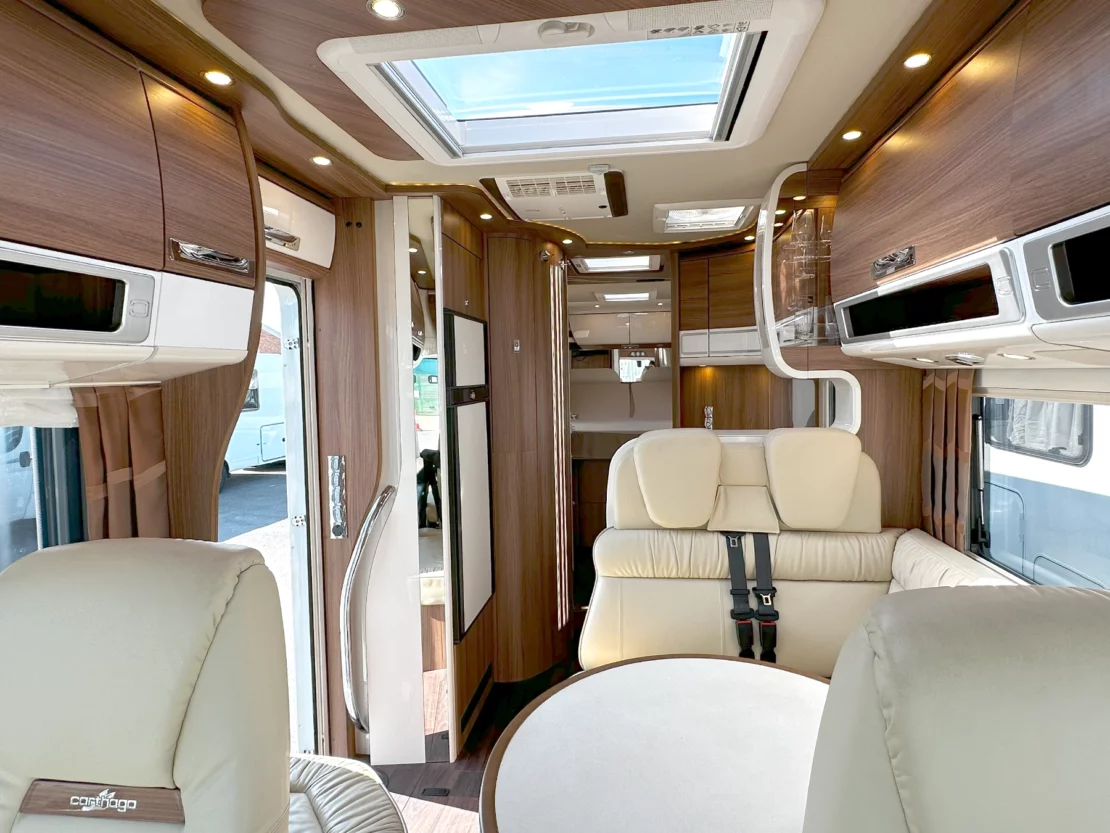
Habitation Essentials
Comfort becomes more important the longer you’re away. A European-ready motorhome should have:
- A decent-sized fresh water tank
- Separate waste (grey) tank
- Efficient heating, especially if travelling in spring or autumn
- A good-sized toilet and shower
A customer of ours recently toured through Germany and Austria and said the insulated tanks and upgraded heating “made a huge difference in the Alps.”
Power and Hook-Up Compatibility
Electric hook-up systems can vary by country, so a European adapter lead is essential. Many sites in France, Germany, and Spain use different sockets.
Solar panels are a smart addition if you’ll be wild camping or using aires, and an inverter is useful for running UK plug devices off the 12V system.
Navigation and Tech
Choose a motorhome with built-in sat nav that covers Europe – or plan to use apps that work offline. A reversing camera is a big help in unfamiliar towns or tight pitches.
Wi-Fi boosters and SIM routers are also worth considering if you need to stay connected abroad.
Documents and Legal Kit
European countries often require drivers to carry certain safety items, including:
- High-vis vests for each passenger
- Warning triangle
- First aid kit
- Beam deflectors for headlights
- Emissions stickers like Crit’Air for French cities
- Valid breakdown and insurance cover for Europe
Check local rules for each country you plan to visit. Rules can vary – for example, Spain requires two warning triangles.
Thinking of Touring Europe?
At Southdowns Motorhomes, we help customers across the UK find the right motorhome for European travel. Whether you’re heading for the Alps, the coast of Spain, or the vineyards of Italy – we’ll help you get there in comfort and confidence.
Browse our latest motorhomes for sale or get in touch to talk through your plans.
Not Sure Where to Start?
Pop in and speak to our friendly team. We’ll walk you through the motorhomes best suited to European travel and help you get set up with everything you need.
Motorhomes for European Travel FAQs
A European-ready motorhome is equipped for longer distances, cross-border travel, and the varying legal and practical requirements of countries across Europe. It typically includes suitable payload, heating, water capacity, and compatible electrics.
Most UK drivers can drive a motorhome up to 3,500kg on a standard category B licence. If your motorhome is heavier, you may need category C1. Always check weight limits before you travel.
Not always. Many European sites use a two-pin system, so you’ll need a CEE to Schuko adapter or a European converter lead.
You’ll need comprehensive motorhome insurance that includes European cover, as well as breakdown assistance that operates abroad. Check the number of days you’re covered for and any country exclusions.
Spring (April–June) and early autumn (September–October) are ideal. You’ll avoid peak summer crowds and benefit from milder weather in southern Europe.
Written by the Southdowns Motorhomes team – helping UK drivers prepare for motorhome adventures across Europe for over 25 years.