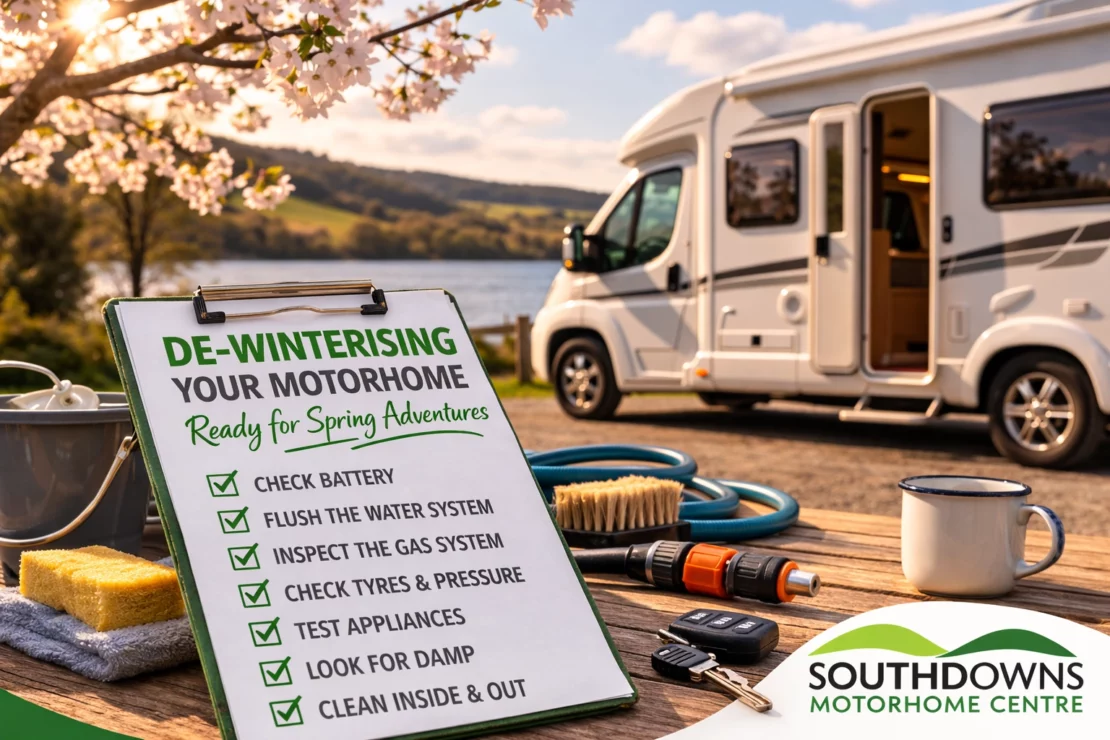
Planning a motorhome trip is exciting, but making sure you have the right equipment can make all the difference. Forgetting key items can turn a smooth trip into a stressful one, so here’s a well-rounded checklist of everything you’ll need – plus a few extra tips to help you avoid common mistakes. If you’re still in the process of selecting your ideal vehicle, check out our Top Tips for Choosing Your Perfect Motorhome.
1. Vehicle and Safety Essentials

- Important Documents: Driving licence, motorhome insurance, breakdown cover, MOT certificate, logbook (V5C), and, if travelling abroad, a Green Card and travel insurance. A printed copy of campsite bookings can also be useful.
- Maintenance Tools: A spare tyre or inflation kit, jack, wheel brace, jump leads, duct tape, WD-40, and a basic toolkit (screwdrivers, spanners, pliers) for minor fixes.
- Safety Equipment: A first aid kit, fire extinguisher, fire blanket, warning triangle, high-visibility vests, spare fuses, and a functioning smoke and carbon monoxide alarm.
- Security Measures: A steering wheel lock, pedal lock box, wheel clamp, or GPS tracker can act as deterrents against theft, especially when parking overnight at unfamiliar sites.
Tip: If you’re hiring a motorhome, double-check what’s included before setting off.
2. Kitchen Supplies

- Cooking Equipment: Stackable pans, a stove or portable BBQ, a grater, chopping board, and a sharp knife.
- Food Staples: Cooking oil, dried pasta or rice, tinned food, long-life milk, coffee, tea, and snacks.
- Space-Saving Essentials: Collapsible washing-up bowls, silicone food storage containers, and a compact drying rack.
- Cool Box or Fridge Organisers: Helps keep fresh food properly stored and prevents spills while driving.
Tip: Pack a few pre-cooked meals for your first day – setting up camp after a long drive is easier when dinner is ready to heat and eat.
3. Living and Sleeping Comforts

- Bedding: Sleeping bags or duvets, pillows, and a mattress topper for extra comfort.
- Heating and Ventilation: Thermal blinds or curtains help regulate temperature, while a small fan can help during hot weather.
- Lighting: Battery-powered LED lanterns or head torches for evenings outside.
Tip: If you’re travelling in winter, consider a hot water bottle or an electric blanket (if your campsite has hook-ups). For comprehensive winter preparation, read our Motorhome Winterisation Guide.
4. Bathroom and Hygiene
- Toiletries: Toothbrush, toothpaste, shampoo, conditioner, body wash, deodorant, and a small mirror.
- Toilet Essentials: Biodegradable toilet chemicals, spare toilet rolls, hand sanitiser, and wet wipes.
- Cleaning Supplies: Multi-purpose cleaner, washing-up liquid, sponge, and a microfibre cloth.
Tip: Campsites can get busy in peak season, so having a portable toilet as a backup is useful. You can also browse essential products from our on-site accessory shop.
5. Campsite and Outdoor Equipment

- Outdoor Furniture: Folding chairs, a small table, and a picnic blanket.
- Levelling Ramps: Essential for parking on uneven ground to avoid sleeping on a slope.
- Windbreak or Awning: Provides shade in the summer and shelter from the wind.
- Torches and Lanterns: Essential for late-night trips to the facilities or setting up camp in the dark.
Tip: Always carry a small dustpan and brush – sand and dirt quickly accumulate inside motorhomes.
For finding suitable overnight stops, consider the Brit Stops Program, which allows free stays at pubs, farms, and other unique locations.
6. Navigation and Connectivity
- Motorhome-Specific Sat Nav: Standard navigation apps don’t account for low bridges or weight restrictions.
- Offline Maps: Useful when driving through areas with poor signal.
- 12V USB Chargers and Power Banks: Keeps devices charged when off-grid.
- UK and European Plug Adapters: If travelling abroad, check which power adapters you’ll need.
Tip: Download the Park4Night or Searchforsites app to find suitable overnight stops.
7. Entertainment and Leisure
- Indoor Activities: Books, board games, playing cards, and a tablet with pre-downloaded films or shows.
- Outdoor Equipment: Frisbees, footballs, hiking gear, or even a paddleboard if you’re heading near the water.
- Binoculars: Handy for spotting wildlife in rural areas.
Tip: Keep a small notebook to jot down memorable locations or campsites – useful for future trips. For more beginner-friendly guidance, check out Motorhome Tips for Beginners.
8. Seasonal and Additional Considerations
For Winter Trips:
- Screen covers to reduce condensation.
- Thermal clothing and extra blankets.
- Snow chains (if required by law in certain countries).
- De-icer and scraper.
For Summer Trips:
- Sun cream and insect repellent.
- Refillable water bottles.
- Portable fan or ventilation solutions.
Tip: Plan your refuelling stops in advance, especially in rural areas where petrol stations may be scarce.
Final Thoughts
Packing for a motorhome trip isn’t just about ticking off a checklist – it’s about making sure your journey is comfortable, safe, and enjoyable. By planning ahead and packing smart, you can spend less time worrying and more time enjoying the open road.
Whether you’re heading off for a weekend escape or a longer adventure, having the right kit will make all the difference. Safe travels!
For more information on campsites, club memberships, and travel planning, consider joining the Caravan and Motorhome Club.