A motorhome is a significant purchase, and security is something most owners will think about at some point.
There is no single security device or method that can guarantee a motorhome will never be stolen. What you can do is reduce the risk by using several sensible measures together.
That might include where you park the vehicle, physical security devices, alarms, immobilisers and monitored tracking.
At Southdowns Motorhomes, we generally favour a layered approach rather than relying on one device alone.
Start With Where You Keep Your Motorhome
Where a motorhome is stored can make a big difference to its security.
If you keep your motorhome at home, think about whether it is visible from the road and how easy it would be for somebody to access it.
Measures worth considering include:
- Parking behind locked gates
- Using driveway posts or barriers
- Keeping keys away from doors and windows
- Using exterior lighting
- Using CCTV where appropriate
- Parking another vehicle in front of the motorhome if practical
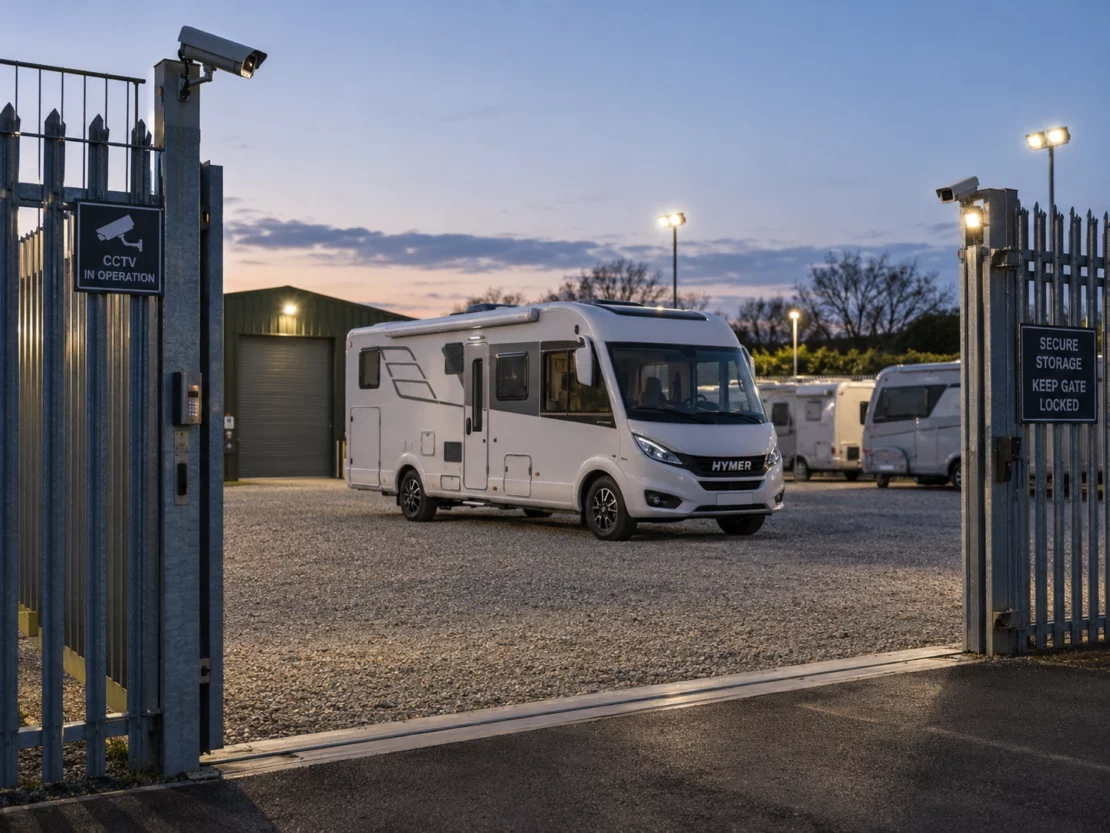
If your motorhome is kept in storage, look at the security arrangements provided by the site.
A well-managed storage facility may have controlled access, fencing, CCTV, lighting and other measures in place.
It is still worth using your own vehicle security as well.
Use More Than One Layer of Security
One of the simplest ways to think about motorhome security is in layers.
For example, your setup might include:
Physical security
A steering lock, wheel clamp or other visible security device.
Electronic security
An alarm or immobiliser.
Monitored tracking
A tracker that can monitor the vehicle and raise alerts if suspicious movement is detected.
Each measure serves a different purpose.
A visible lock may make the vehicle harder to move.
An alarm may draw attention to tampering.
A tracker can help identify unexpected movement and provide location information.
Using several measures together can make the vehicle less straightforward to interfere with.
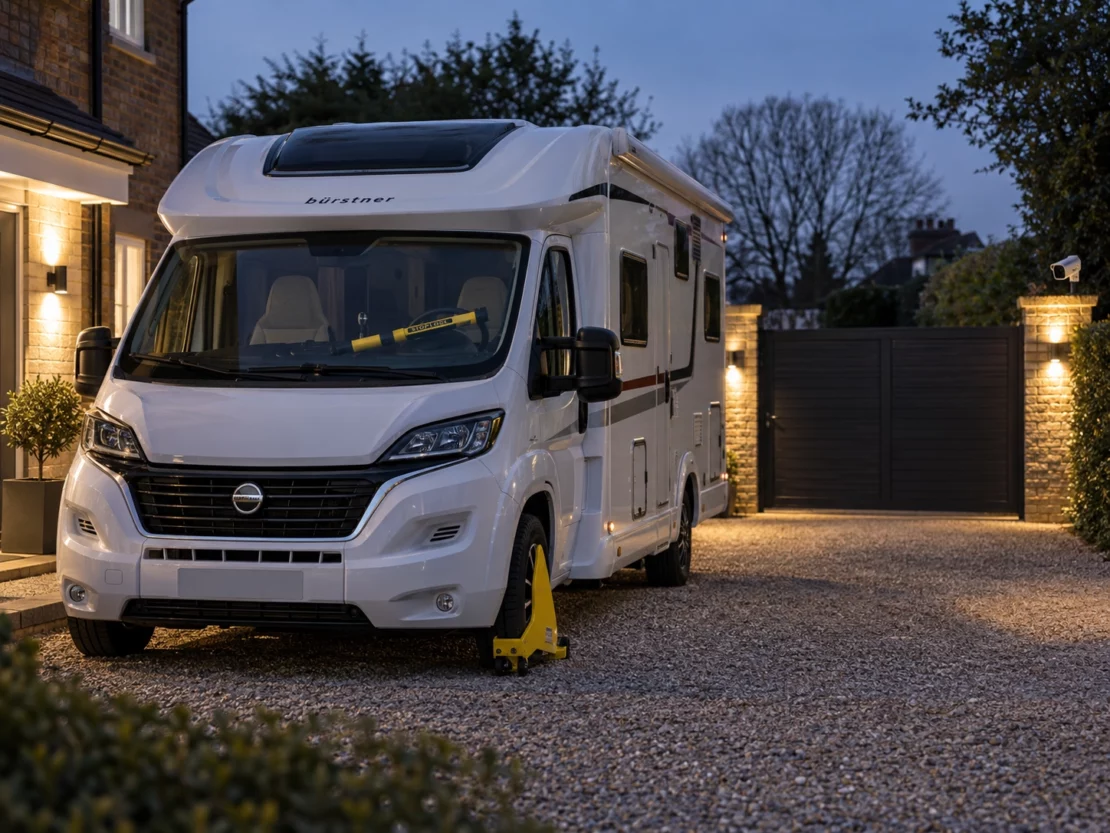
Consider a Visible Steering Lock
A good steering lock is one of the easiest security measures to see from outside the motorhome.
That visibility can be useful because it makes it clear that another obstacle has to be dealt with before the vehicle can be driven away.
A steering lock should not be your only security measure, but it can form part of a wider setup.
When choosing one, make sure it is suitable for your particular steering wheel and motorhome.
Wheel Clamps and Other Physical Security
A wheel clamp is another visible option.
Depending on where you park, you may also consider:
- Wheel clamps
- Pedal locks
- Gear lever locks
- Security posts
- Driveway barriers
The best option depends on the vehicle and how you use it.
A touring motorhome may need security that is quick to fit and remove.
A motorhome kept in storage for several months may suit a heavier physical security setup.
Use the Alarm and Immobiliser Properly
Many modern motorhomes may have factory or aftermarket alarm and immobiliser systems.
Make sure you understand how they work and use them consistently.
It is worth checking:
- Whether the alarm covers the cab only or habitation area as well
- Whether doors, lockers and windows are included
- Whether the alarm is linked to any other security system
- Whether the immobiliser meets your insurer’s requirements
If you are unsure what is fitted to your motorhome, ask your dealer or workshop to check.
Keep Your Keys Secure
Vehicle security is not only about equipment fitted to the motorhome.
Your keys matter too.
Avoid leaving motorhome keys:
- Near the front door
- In obvious bowls or trays
- Beside windows
- In an unlocked garage
- Inside another unattended vehicle
If your motorhome uses keyless technology, ask whether additional protection is recommended for that system.
You should also keep spare keys secure and avoid attaching identifying information to the keyring.
Think About Driver Identification
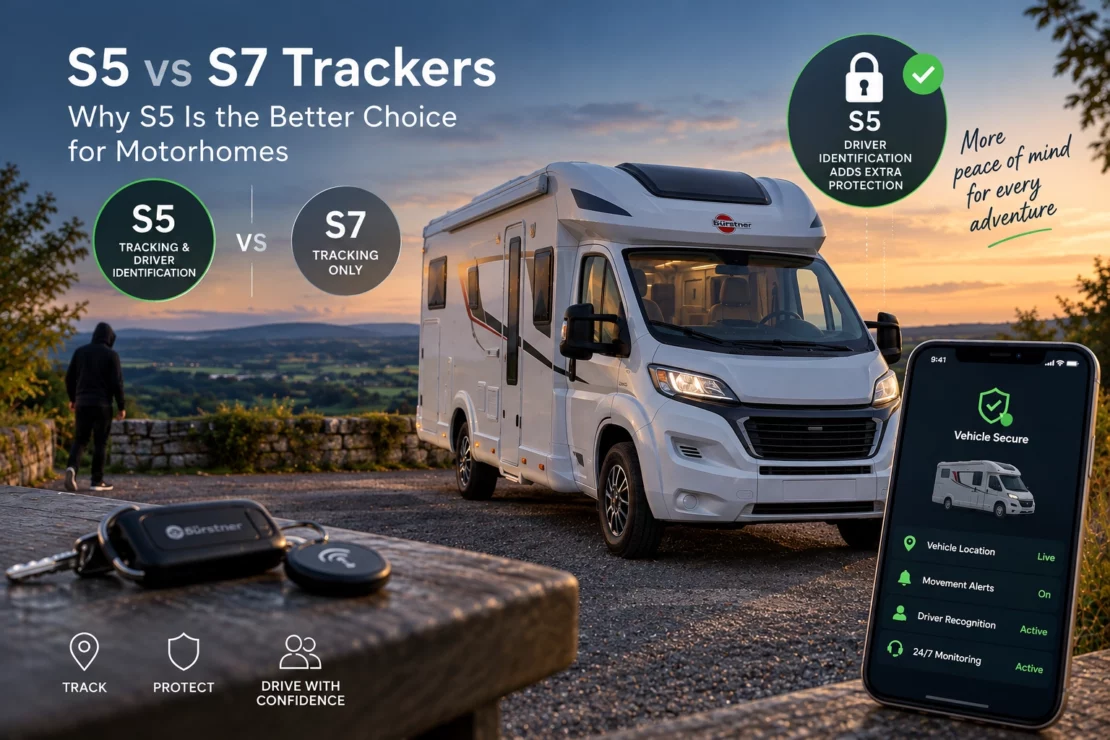
This is one reason we favour S5 tracking systems for motorhomes.
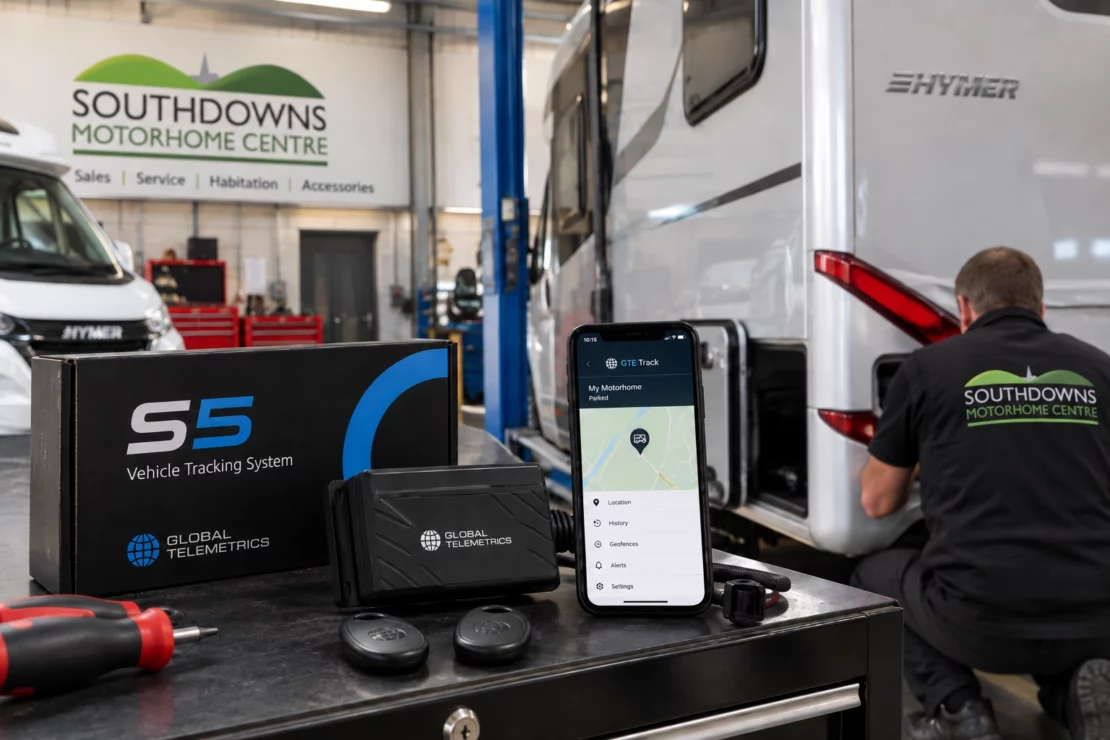
An S5 tracker adds driver identification to monitored vehicle tracking.
That means the system can check whether the vehicle is moving with the expected authorised driver identification present.
If the motorhome moves without that identification, an alert can be raised.
For a high-value vehicle that may sit unused for long periods, this can add a useful extra check alongside the vehicle keys and other security devices.
Add Monitored Tracking
A monitored tracker can add another layer to your motorhome security setup.
Depending on the system fitted, it may provide:
- Vehicle location
- Movement alerts
- Battery disconnection alerts
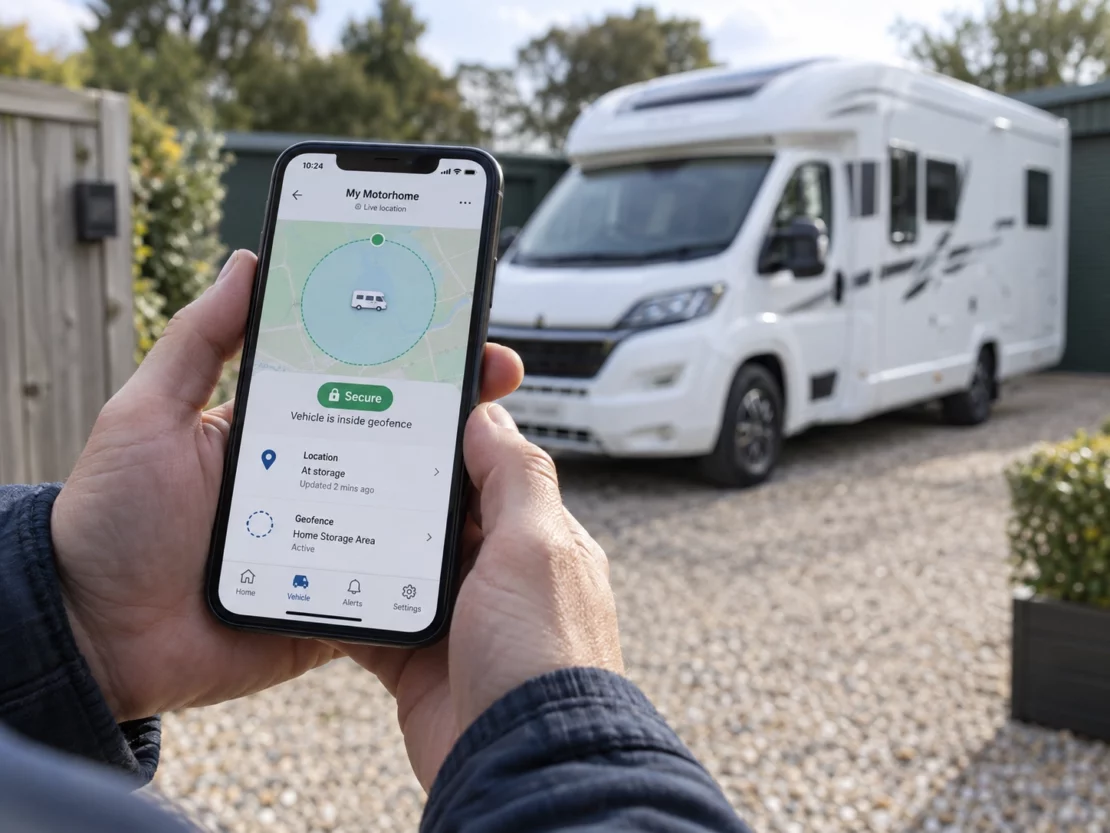
- Geofencing
- Journey information
- Driver identification on S5 systems
- 24-hour monitoring
A tracker should not be treated as a guarantee against theft.
Its role is to help identify unexpected movement, provide location information and support monitoring if the system raises an alert.
For many owners, that makes it a sensible addition to physical and electronic security.
Why We Prefer S5 Tracking for Motorhomes
There are different tracker categories available, including S7 and S5.
Both can provide monitored tracking, but S5 adds driver identification.
For motorhomes, we generally see that as the better option where the owner wants a stronger level of monitoring.
Motorhomes often:
- Have a high replacement value
- Spend long periods parked
- Sit in storage for part of the year
- Travel away from home
- Carry additional equipment and personal belongings
Driver identification means the tracking system has another way of identifying movement that may not be authorised.
If you want to compare the two categories in more detail, read our guide to S5 vs S7 trackers for motorhomes.
Use Geofencing if Your Tracker Supports It
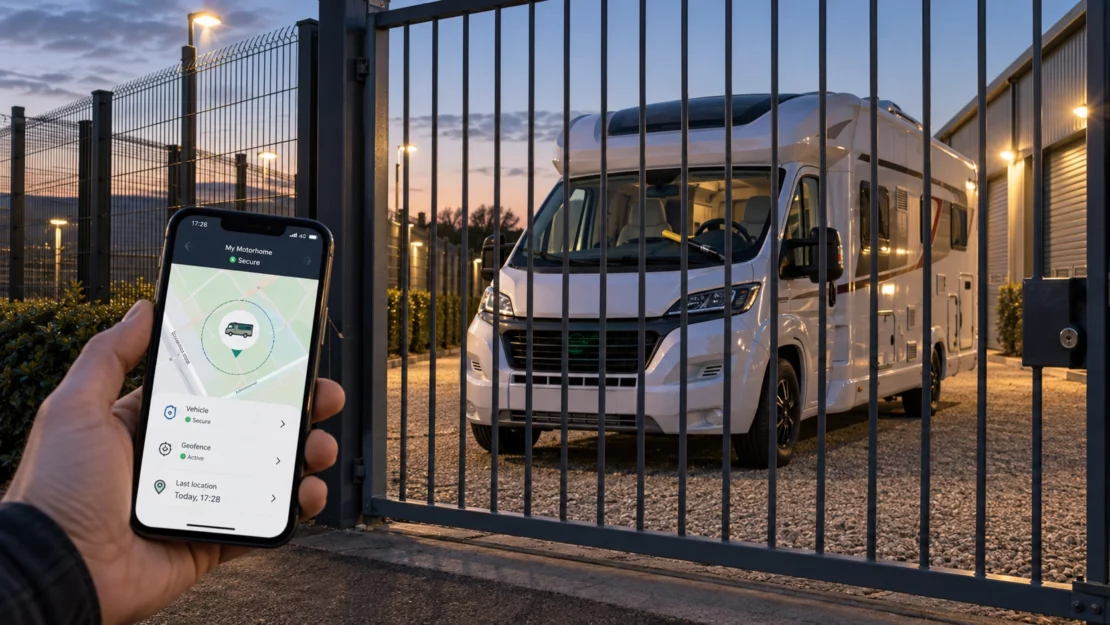
Geofencing can be particularly useful for stored motorhomes.
A geofence creates a virtual boundary around a location.
For example, you could set one around:
- Your home
- A storage site
- A campsite
- A long-term parking area
If the motorhome leaves or enters that area, the app may provide a notification.
It is not a substitute for physical security, but it can make it easier to keep an eye on a motorhome that is not directly outside your home.
Don’t Leave Obvious Valuables on Show
Motorhome theft and theft from a motorhome are different risks, but the same general principle applies.
Avoid leaving visible items such as:
- Laptops
- Tablets
- Cameras
- Sat-nav equipment
- Handbags
- Wallets
- Keys
- Expensive accessories
If somebody looking through a window can see expensive equipment, it may make the vehicle a more attractive target.
Use blinds or screens where appropriate and take portable valuables with you when possible.
Be Careful About What You Share Online
Social media can unintentionally reveal that a motorhome is away from home, in storage or parked somewhere for an extended period.
You do not need to stop sharing your trips, but it is worth thinking about how much information you post publicly.
For example, you may want to avoid:
- Sharing an exact storage location
- Posting a home address alongside motorhome photos
- Showing keys or security devices clearly
- Posting long-term travel plans publicly
- Sharing clear images of sensitive vehicle information
A little discretion can help avoid advertising where the vehicle is normally kept.
Check Your Insurance Requirements
Insurance policies can include specific security conditions.
These may depend on:
- Motorhome value
- Make and model
- Storage location
- Existing security equipment
- Tracker specification
Do not assume that one security device will meet every insurer’s requirements.
If your insurer asks for a tracker, confirm whether they require S7, S5, S5+ or another specification.
If they have specified S5, let us know when you book your installation.
Review Your Security Setup From Time to Time
Security arrangements can change as the way you use your motorhome changes.
For example, you may move from driveway parking to a storage facility, buy a higher-value motorhome or change insurer.
It is worth reviewing your setup occasionally rather than assuming that what worked several years ago is still the right arrangement.
You may find that adding a tracker, replacing an old lock or changing your storage setup makes sense.
Motorhome Security Works Best in Layers
There is no way to promise that a motorhome can never be stolen.
A sensible approach is to make the vehicle harder to interfere with and easier to monitor by combining several security measures.
That may include:
- Secure parking
- Visible physical security
- An alarm
- An immobiliser
- Key security
- Monitored tracking
- Driver identification
The right combination will depend on your motorhome, where you keep it and what your insurer requires.
S5 Motorhome Tracker Fitting at Southdowns
If you are thinking about adding monitored tracking to your motorhome security setup, Southdowns Motorhomes can help.
We can discuss your vehicle, check what your insurer has asked for and arrange professional S5 tracker fitting.
S5 systems provide monitored tracking with driver identification, making them a strong option for motorhome owners who want an additional layer of security.
FAQs
There is no single measure that suits every motorhome. A layered approach can include secure parking, physical security devices, an alarm or immobiliser, and monitored tracking.
A tracker cannot guarantee that a theft will not happen. Its role is to help detect unexpected movement, provide location information and support monitoring if an alert is raised.
For many owners, yes. S5 adds driver identification to monitored tracking, which can provide another layer of security alongside locks, alarms and immobilisers.
It can be sensible to use both. A steering lock provides visible physical security, while a tracker can help monitor the vehicle if it moves unexpectedly.
Secure storage can reduce risk, but it is still sensible to consider your own vehicle security. Site security and vehicle security work best together.
Geofencing lets you set a virtual boundary around a location such as your home or storage site. The system may then notify you if the motorhome enters or leaves that area.
Some do. Requirements can vary by insurer, policy, vehicle value and storage location, so you should check the exact conditions of your policy.
S5 adds driver identification, which S7 does not. For owners who want a higher level of monitoring, S5 is usually the stronger option.
In many cases, yes. The exact installation depends on the vehicle and its electrical setup.
Southdowns Motorhomes can arrange supply and fitting for S5 tracking systems and advise on the right setup for your motorhome and insurer requirements. Our cost includes your first years’ subscription cost too.
Written by the Southdowns Motorhomes team. With decades of experience supplying premium motorhomes to UK and European customers, our team understands what makes a vehicle suitable for serious touring.