If you’re planning a trip to Kent – especially around Tunbridge Wells, Pembury or nearby towns – or already touring the area in your campervan or motorhome, you may have seen the news about the major water disruption affecting households, campsites and travellers alike. With a “boil water notice” in place and supplies limited, many touring visitors are unsure what to do about their onboard water tanks, where they can safely refill, and how to plan their stay.
At South East Water (SEW)’s supply network, the notice affects households in parts of the Tunbridge Wells area.
If you’re travelling with a motorhome – here’s some clear guidance to help you stay safe and comfortable while the situation continues.
📍 Which areas are affected?
SEW has issued a boil-water notice for customers in the Tunbridge Wells area – including the following postcodes:
TN1 1, TN1 2, TN11 0, TN13 1, TN2 3, TN2 4, TN2 5, TN3 9, TN4 0, TN4 8, TN4 9
If your planned campervan route, overnight stay or campsite falls within those postcodes, you should treat tap water as unsafe for drinking, cooking, brushing teeth, or preparing food – unless it’s been properly boiled first.
Even if your van’s onboard tank was filled outside these areas, consider how and when you intend to refill – and whether water sources are reliable.
💧 Does the boil-water notice affect onboard tanks?
Yes, but exactly how it affects depends on when and where you filled up:
- If you filled your tank before entering the affected postcodes, and the water was clean, your stored water should be generally fine.
- If you filled it during or after the notice came into effect, then you must treat everything in the tank as non-drinking water until the notice is lifted.
- If you don’t remember exactly when the tank was topped up – better to assume it’s unsafe for drinking.
Standard motorhome filters do not guarantee safety, they don’t remove issues caused by contamination or chemical/treatment failures.
Therefore: only use onboard water for non-drinking purposes (toilets, washing, showers), unless you can boil it for at least one minute before use.
🔥 What about drinking, cooking and food use?
During the boil-water notice, for anything you ingest or use for food or oral hygiene (water for cooking, drinking, brushing teeth, preparing baby or pet food, etc.), follow this guidance:
- Use bottled water, OR
- Use boiled water (from onboard tank or otherwise), boiled for at least one full minute then cooled safely before use.
If in doubt, better to skip using onboard or tap water for ingestion.
🚱 Can you safely refill your tank or use campsite taps?
If you need to top up your water while touring:
- Check your postcode first. If it’s within the affected list above, assume tap water is unsafe for drinking.
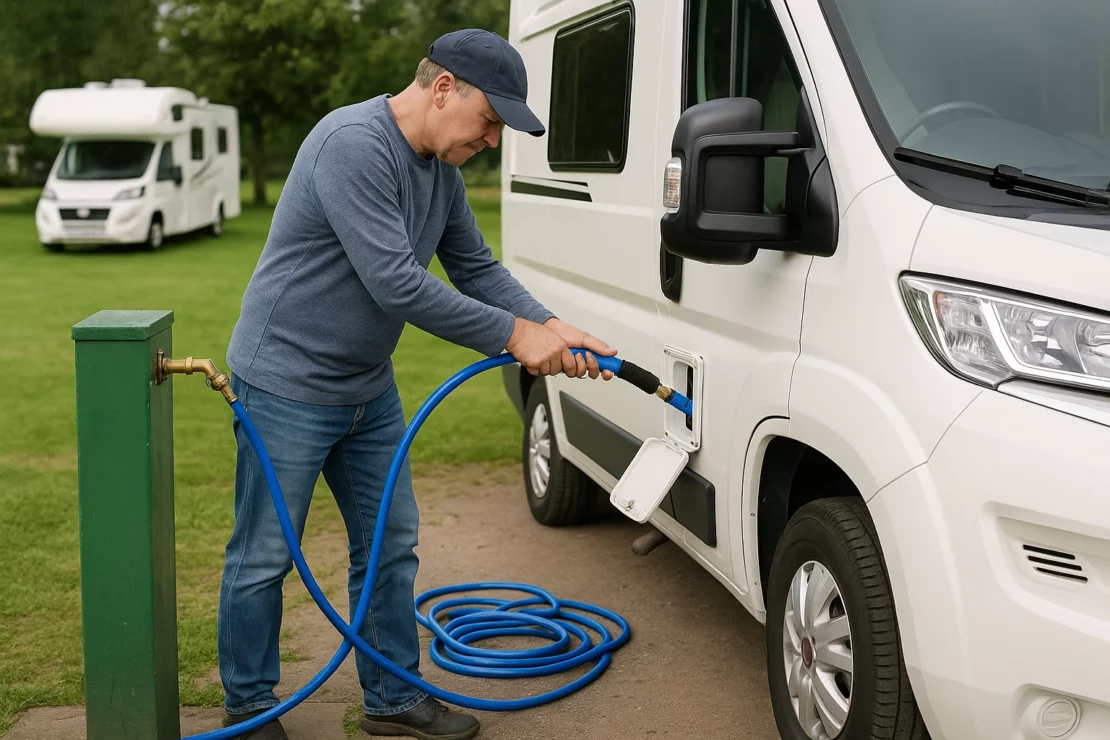
- Avoid filling from public taps, petrol-station water points, campsite taps or roadside refill points in the restricted zone – unless the site confirms their supply is safe (or from a different, unaffected source).
- If possible, refill outside the affected area, before entering the TN1–TN4 region; carry extra containers of safe water for drinking and cooking.
- Always use food-grade hoses and avoid cross-contamination.
🧼 Best onboard-water hygiene practices (especially now)
This crisis is a good reminder for all motorhome owners to follow good water hygiene, including:
- Regularly clean and flush your onboard tank (especially if you travel often).
- Use food-grade hoses and fittings for refilling.
- Keep some bottled water stock on board for emergencies.
- After the boil-notice is lifted and water supply returns: empty your tank, flush thoroughly and refill with fresh, safe water.
🏕️ Advice for visitors staying on campsites in the affected area
If you arrive on a campsite in or near Tunbridge Wells / Pembury:
- Ask whether their water supply is affected by the notice.
- Confirm whether water used in taps, showers or kitchen blocks is considered safe for drinking or only for washing.
- Keep extra bottled water on hand for drinking or cooking.
- Avoid drinking from campsite taps or using filter-only systems unless receipt of safe water is confirmed.
🧭 Campervan Traveller Checklist: Kent Water Disruption Edition
✔ Check your route & overnight postcodes against the affected list.
✔ Fill up your tank before entering TN1–TN4 postcodes, if possible.
✔ Bring extra bottled water for drinking, cooking, and washing.
✔ Use tank water only for non-ingestion uses.
✔ If necessary, boil tank or tap water before consuming.
✔ Clean and flush your tank after notice is lifted before refilling.
Kent Water Campervan & Motorhome FAQ’s
Yes – for washing, showering, flushing toilets etc. Water used this way doesn’t need to be boiled. But don’t drink it, or use it for food hygiene.
No – standard filters improve taste, but do not guarantee safety from chemical or bacterial contamination.
Only if the campsite confirms their supply is not under the boil-water notice or comes from an unaffected source. Always check first.
Use bottled water or boiled water for pets, babies, and children. Avoid tap or tank water for food, drinking, or teeth/brushing.
Yes – empty your tank, flush thoroughly, refill with a fresh supply of water to avoid leftover contamination or stale water.
🧭 Conclusion
Water supply disruptions – especially in areas popular with travellers – can complicate camping and touring plans. But with a bit of foresight and sensible water-management, campervan and motorhome users can stay safe, comfortable and flexible – even when local supplies are unreliable.
Written by the Southdowns Motorhomes team. With decades of experience supplying premium motorhomes to UK and European customers, our team understands what makes a vehicle suitable for serious touring.