When choosing a motorhome, most buyers focus on the layout, sleeping arrangements, storage and overall size. However, one decision that can make a real difference to your time on the road is whether to choose an automatic or manual gearbox.
Both have their advantages, and the right choice will depend on your driving preferences, budget and how you plan to use your motorhome.
Whether you’re heading off for weekends along the South Coast, exploring the Scottish Highlands or travelling across Europe, the gearbox you choose can affect how comfortable and enjoyable those journeys feel.
At Southdowns Motorhomes, we help customers find motorhomes that suit the way they want to travel. Here, we look at the differences between automatic and manual motorhomes to help you decide which is right for you.
What Is the Difference Between an Automatic and Manual Motorhome?
The main difference is how the vehicle changes gear.
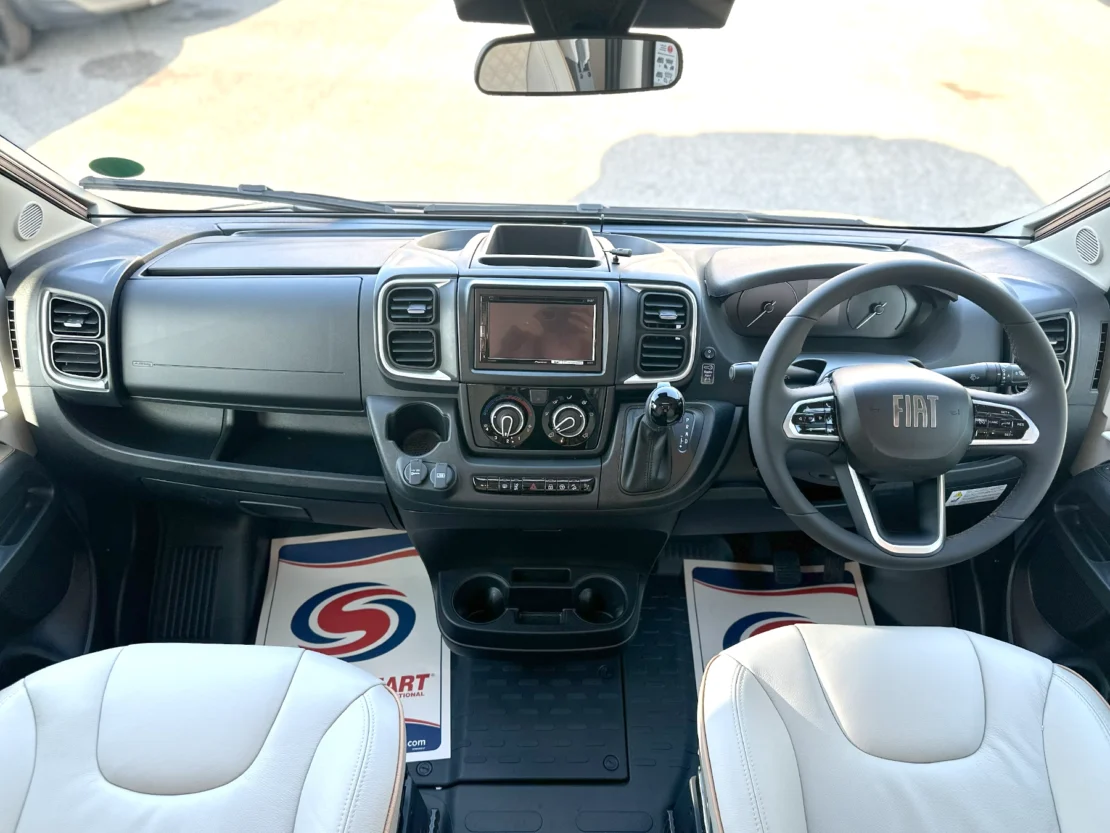
An automatic motorhome changes gears for you during normal driving, meaning there is no clutch pedal to operate. This can make driving feel more straightforward, particularly in busy traffic or when navigating unfamiliar roads.
A manual motorhome requires the driver to select gears using a gear lever and clutch pedal. Many drivers are familiar with this arrangement and prefer the direct control it provides.
Both types are suitable for touring, but they offer different driving experiences.
The Benefits of an Automatic Motorhome
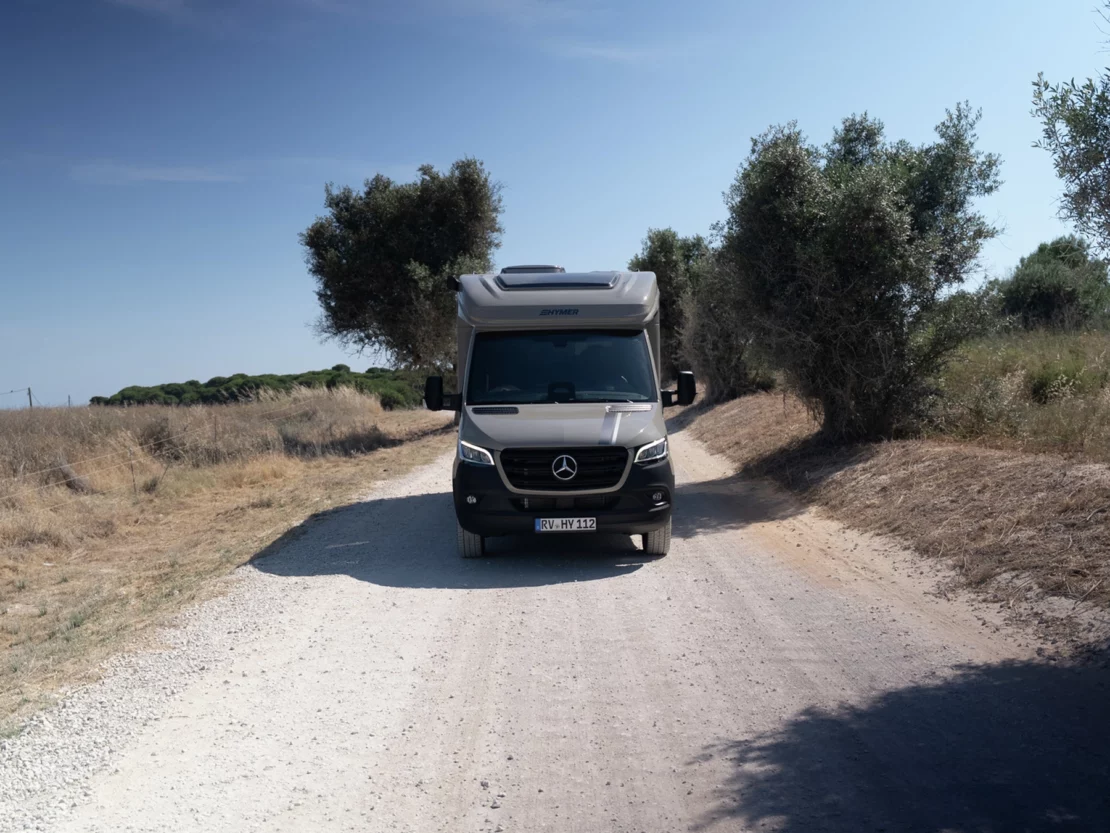
Automatic motorhomes have become an increasingly popular choice, particularly for buyers planning longer journeys or looking for a more relaxed driving experience.
Easier Driving in Traffic
One of the biggest benefits of an automatic motorhome is the reduced effort required when driving in stop-start traffic.
Motorhomes are generally larger and heavier than everyday cars, so repeated clutch operation and gear changes can become tiring, especially in congested towns or on busy motorways.
With an automatic gearbox, you can concentrate on steering, braking and the road ahead without having to change gears manually.
This can be particularly useful when travelling through busy European cities or dealing with summer holiday traffic.
More Comfortable for Long-Distance Touring
If you’re planning extended motorhome holidays, driving comfort is an important consideration.
Automatic gearboxes take care of gear changes, reducing the amount of work required from the driver. Over several hours on the road, this can make the journey feel less demanding.
For couples sharing the driving, an automatic motorhome may also be a good option if one driver feels more comfortable without a clutch pedal.
Helpful When Driving on Hills
Touring destinations such as Cornwall, the Lake District and the Scottish Highlands often involve steep hills and winding roads.
An automatic gearbox removes the need to coordinate the clutch and accelerator during hill starts, which many drivers find reassuring in a larger vehicle.
Modern automatic motorhomes may also provide selectable gears or driving modes to help manage steep descents.
However, it’s important to understand how your particular gearbox works, especially when travelling through mountainous areas.
Easier Low-Speed Manoeuvring
Arriving at a campsite often means negotiating narrow entrances, parking areas or pitches with limited space.
Without a clutch pedal to manage, some drivers find an automatic easier to manoeuvre at low speeds.
The response does vary between different automatic gearbox designs, though, so it’s worth trying the vehicle before making a decision.
Are There Any Disadvantages to Automatic Motorhomes?
Although automatic motorhomes have plenty of benefits, there are a few factors worth considering.
Purchase price: Automatic versions of some motorhomes can cost more than equivalent manual models. The difference depends on the manufacturer, model and specification.
Maintenance and repairs: Some automatic gearboxes require specialist maintenance, and repairs can be costly. Always check the manufacturer’s servicing requirements.
Driving preferences: Drivers who enjoy selecting their own gears may find a manual gearbox more engaging.
It’s also worth remembering that not all automatic gearboxes work in the same way. Conventional automatics and automated manual transmissions can feel noticeably different, particularly during slow manoeuvres.
The Benefits of a Manual Motorhome
Although automatic motorhomes are increasingly common, manual models remain a good choice for many buyers.
More Direct Control Over Gear Changes
A manual gearbox allows you to decide exactly when to change gear.
Some drivers prefer this level of control, particularly on winding country roads or when driving through hilly areas.
Selecting a lower gear can also help control speed on downhill sections by using engine braking.
Many automatic motorhomes offer similar functions, but drivers familiar with manual gearboxes may prefer making these decisions themselves.
Potentially Lower Purchase Costs
Depending on the model and age, a manual motorhome may be less expensive to purchase than an automatic equivalent.
For buyers working within a particular budget, this could leave more money available for accessories, equipment or future trips.
Choosing a manual model may also open up additional options when comparing pre-owned motorhomes.
Familiar Driving Experience
If you’ve spent years driving manual cars or vans, a manual motorhome may feel completely natural.
Although the vehicle is larger, the basic driving controls remain familiar.
For confident manual drivers, there may be little reason to change unless they specifically want the convenience of an automatic.
Are There Any Disadvantages to Manual Motorhomes?
The main disadvantage of a manual motorhome is the extra physical effort required to drive it.
Frequent gear changes and clutch operation can become tiring in heavy traffic or on demanding routes.
Hill starts may also require more concentration, particularly when driving a fully loaded motorhome.
Clutch wear is another consideration, especially on older or higher-mileage vehicles. When buying a used manual motorhome, it’s worth checking that the clutch operates smoothly and the gears engage correctly.
Automatic vs Manual Motorhomes: Which Is More Fuel Efficient?
Fuel economy is an important consideration for anyone planning regular motorhome trips.
Traditionally, manual gearboxes were often considered more fuel efficient than automatics. However, modern automatic transmissions have improved considerably, and the difference can now be relatively small.
Some modern automatic gearboxes have multiple ratios and can select gears efficiently to suit the driving conditions.
In practice, fuel consumption depends on several factors, including:
- The motorhome’s size and weight
- Engine and gearbox design
- Driving speed and style
- Road conditions and terrain
- How heavily the motorhome is loaded
Rather than choosing a gearbox based on fuel economy alone, it’s better to compare the specifications and published fuel consumption figures of the individual vehicles you’re considering.
Which Gearbox Is Better for Touring in the UK and Europe?
Both automatic and manual motorhomes are capable of touring throughout the UK and Europe, but certain journeys may make one option more appealing.
Touring the UK
British motorhome touring often involves a combination of motorway driving, narrow country lanes, steep hills and busy town centres.
An automatic motorhome can make frequent changes in speed easier to manage, particularly in traffic or on unfamiliar routes.
However, drivers who enjoy manual gear changes may find a manual motorhome equally comfortable.
Touring Europe
For longer European tours, an automatic motorhome can be particularly appealing.
Travelling through France, Spain, Germany or Italy may involve long motorway journeys followed by unfamiliar towns, mountain roads or busy campsites.
An automatic gearbox removes one task from the driving process, allowing you to concentrate on the route and surrounding traffic.
For those planning regular European trips, this added convenience may be worth considering.
Mountain Roads and Steep Gradients
If you’re planning to explore mountainous regions, both automatic and manual motorhomes can perform well when driven correctly.
Manual gearboxes offer direct control over gear selection, while many modern automatics include settings that allow the driver to hold lower gears.
Whichever gearbox you choose, always follow the manufacturer’s guidance for driving on steep gradients and use suitable engine braking when descending hills.
Automatic vs Manual Motorhomes: Quick Comparison
| Feature | Automatic Motorhome | Manual Motorhome |
|---|---|---|
| Driving in traffic | Generally easier | Requires clutch and gear changes |
| Long-distance comfort | Often more relaxed | Depends on driver preference |
| Hill starts | No manual clutch operation | Requires clutch control |
| Gear selection | Mostly automatic | Controlled by the driver |
| Purchase price | Can be higher | Can be lower |
| Maintenance | Depends on gearbox design | Clutch maintenance may be needed |
| Fuel economy | Competitive with modern gearboxes | Depends on vehicle and driving style |
| Touring suitability | Well suited to regular and long-distance touring | Suitable for all types of touring |
Should You Choose an Automatic or Manual Motorhome?
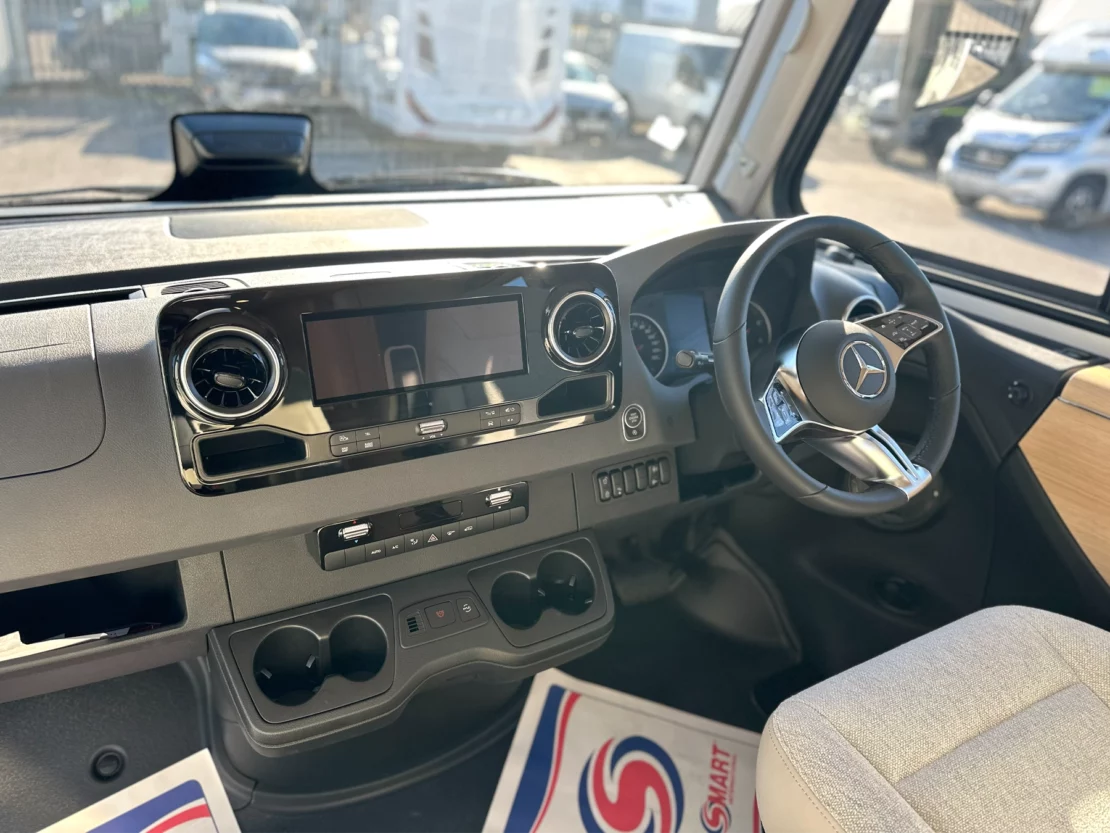
The best choice ultimately comes down to how you want to travel.
An automatic motorhome may be better for you if:
- You regularly travel long distances.
- You want a more relaxed driving experience.
- You frequently encounter busy traffic.
- You prefer not to operate a clutch.
- You plan to tour through unfamiliar towns or mountainous regions.
A manual motorhome may be better for you if:
- You enjoy changing gears yourself.
- You’re already comfortable driving larger manual vehicles.
- You’re looking for a particular model within a set budget.
- You prefer direct control over gear selection.
There is no single gearbox that’s right for everyone. The motorhome’s layout, weight, driving position and overall comfort are just as important as its transmission.
Before buying, it’s also worth checking your driving licence entitlement, particularly if you’re considering a motorhome with a maximum authorised mass above 3,500kg. If you hold an automatic-only driving licence, you’ll need to choose a vehicle your licence permits you to drive.
Find Your Next Motorhome at Southdowns Motorhomes
Whether you prefer an automatic or manual gearbox, finding the right motorhome starts with understanding how you intend to use it.
At Southdowns Motorhomes, we offer a wide selection of new and used motorhomes from leading manufacturers, including HYMER, Burstner, Carthago and Carado.
Our team can talk you through the different models, gearbox options and vehicle specifications to help you find something that suits your touring plans.
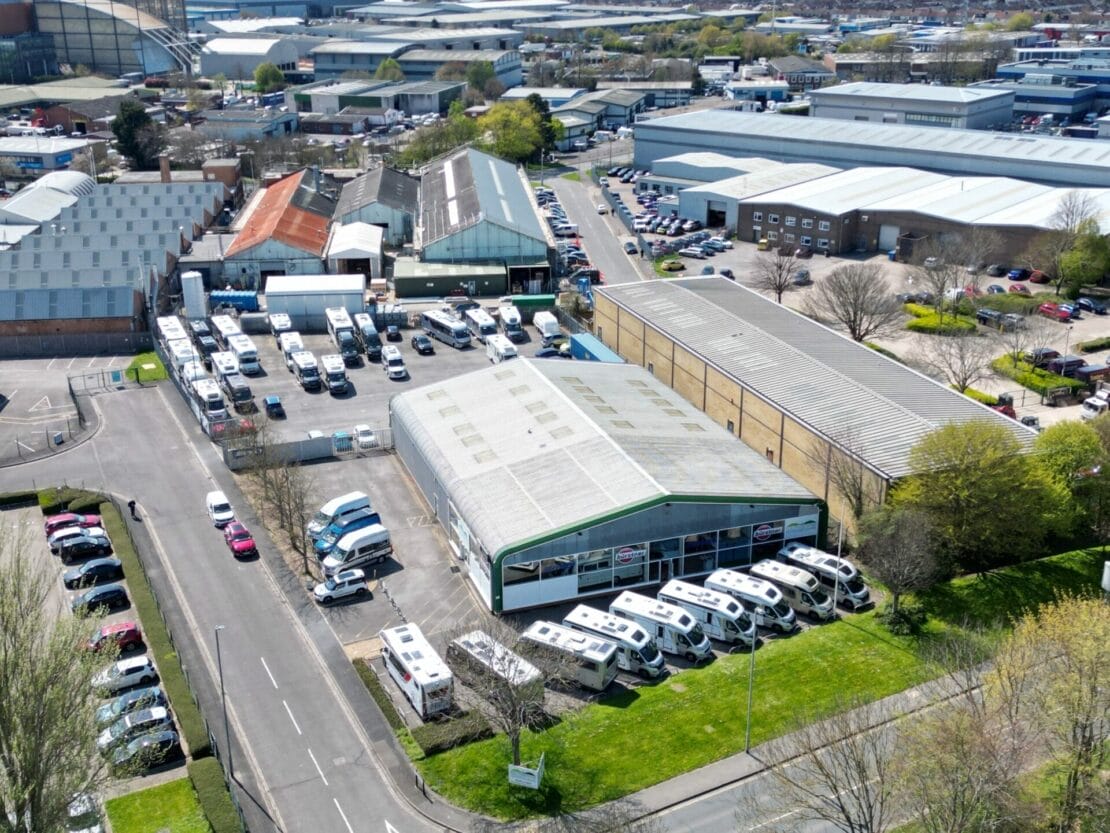
You can browse our motorhomes for sale online, including the available gearbox filtering options, or visit our showroom in Portsmouth to discuss your requirements.
If you’re unsure which gearbox is right for you, we’re happy to help you compare the options.
Contact Southdowns Motorhomes or call us on 02392 674820 to speak with our team about your next motorhome.
Frequently Asked Questions About Automatic and Manual Motorhomes
Many drivers find automatic motorhomes easier to drive because there’s no need to operate a clutch or change gears manually. This can be particularly helpful in heavy traffic, on steep hills or when navigating unfamiliar roads. Automatic motorhomes can also make longer journeys feel less tiring, making them a popular choice for touring throughout the UK and Europe.
Both automatic and manual motorhomes can be reliable when properly maintained. Modern automatic gearboxes are designed for regular use, although servicing requirements vary depending on the transmission. Manual motorhomes generally have simpler gearbox systems but may require clutch replacement over time. When buying a used motorhome, it’s important to check the service history and condition of the gearbox, regardless of which type you choose.
Not necessarily. Modern automatic motorhomes can offer fuel economy comparable to manual models, particularly when fitted with newer, efficient transmissions. Fuel consumption depends on the engine, vehicle weight, driving conditions and individual driving style. If running costs are a priority, compare the fuel economy figures for the specific motorhomes you’re considering rather than relying on the gearbox type alone.
Automatic motorhomes can make driving on mountain roads more comfortable, particularly when dealing with steep hill starts and frequent changes in speed. Many modern automatic gearboxes also allow drivers to select lower gears for additional control when descending hills. Manual motorhomes offer similar control through direct gear selection. Both are suitable for mountain touring, provided the driver uses the appropriate gears and follows the vehicle manufacturer’s guidance.
Automatic motorhomes can cost more than equivalent manual models, although the price difference varies between manufacturers, vehicle specifications and model years. Some newer motorhomes are available with automatic transmissions as standard, while others offer them as an optional extra. When comparing new or used motorhomes, it’s worth considering the overall specification, condition and features rather than focusing on the gearbox alone.
If you’re buying your first motorhome, an automatic model may be a good choice if you want a straightforward, relaxed driving experience. Not having to operate a clutch can make it easier to concentrate on the vehicle’s size, road positioning and surroundings. However, if you’re confident driving manual vehicles, a manual motorhome could be equally suitable. At Southdowns Motorhomes, our team can help you compare different models and find a motorhome that suits your driving preferences, budget and touring plans.
Written by the Southdowns Motorhomes team. With decades of experience supplying premium motorhomes to UK and European customers, our team understands what makes a vehicle suitable for serious touring.