When choosing a campervan, it is easy to focus on the layout, number of berths, storage and specification. But there is another figure worth checking before you buy: the campervan’s payload.
Payload tells you how much additional weight you can carry once the weight of the vehicle itself has been taken into account.
That includes much more than luggage. Passengers, water, food, bikes, camping equipment and accessories can all use part of the available payload.
Understanding the numbers can help you choose a campervan that suits the way you intend to travel and avoid loading the vehicle beyond its permitted weight.
What Is Campervan Payload?
Campervan payload is the amount of additional weight available for passengers, luggage, equipment and other items carried in the vehicle.
It is generally calculated by subtracting the vehicle’s Mass in Running Order (MRO or MIRO) from its Maximum Technically Permissible Laden Mass.
The MRO normally includes items such as the driver allowance, fuel and essential operating fluids, but the exact allowances can vary between manufacturers and models.
Fresh water is particularly important to check. Some manufacturers calculate MRO with the fresh-water tank at 20l, meaning any additional water you carry will reduce the remaining payload.
Always check the manufacturer’s figures for the individual campervan to see exactly what is included in its quoted MRO and payload.
What Counts Towards Your Campervan Payload?
A common mistake is thinking that payload simply means the weight of your suitcases.
In reality, many everyday items can count towards the vehicle’s total loaded weight, including:
- Driver and passengers
- Clothing and luggage
- Fresh water
- Food and drink
- Outdoor furniture
- Bedding
- Cooking equipment
- Bikes
- Bike racks
- Camping equipment
- Additional batteries or electrical equipment
- Accessories fitted after the vehicle was built
Individually, many of these items may seem light. Added together, however, they can take up a sizeable amount of payload.
This is particularly worth thinking about if you plan longer trips or regularly travel with several passengers.
An Example of Campervan Payload
Imagine a campervan has a Maximum Authorised Mass of 3,500kg and, using the manufacturer’s stated weight figures, has 500kg of available payload.
That 500kg needs to cover whatever is not already included within the manufacturer’s quoted starting weight.
For example:
| Item | Example Weight |
|---|---|
| Two additional passengers | 150kg |
| Fresh water | 70kg |
| Luggage | 50kg |
| Two bikes | 40kg |
| Food and drink | 30kg |
| Outdoor furniture and equipment | 25kg |
| Other equipment | 35kg |
| Total | 400kg |
In this example, what initially looked like a generous 500kg payload has been reduced to around 100kg.
The figures above are illustrative rather than recommended allowances. Your passengers and equipment will vary.
Why Campervan Payload Matters
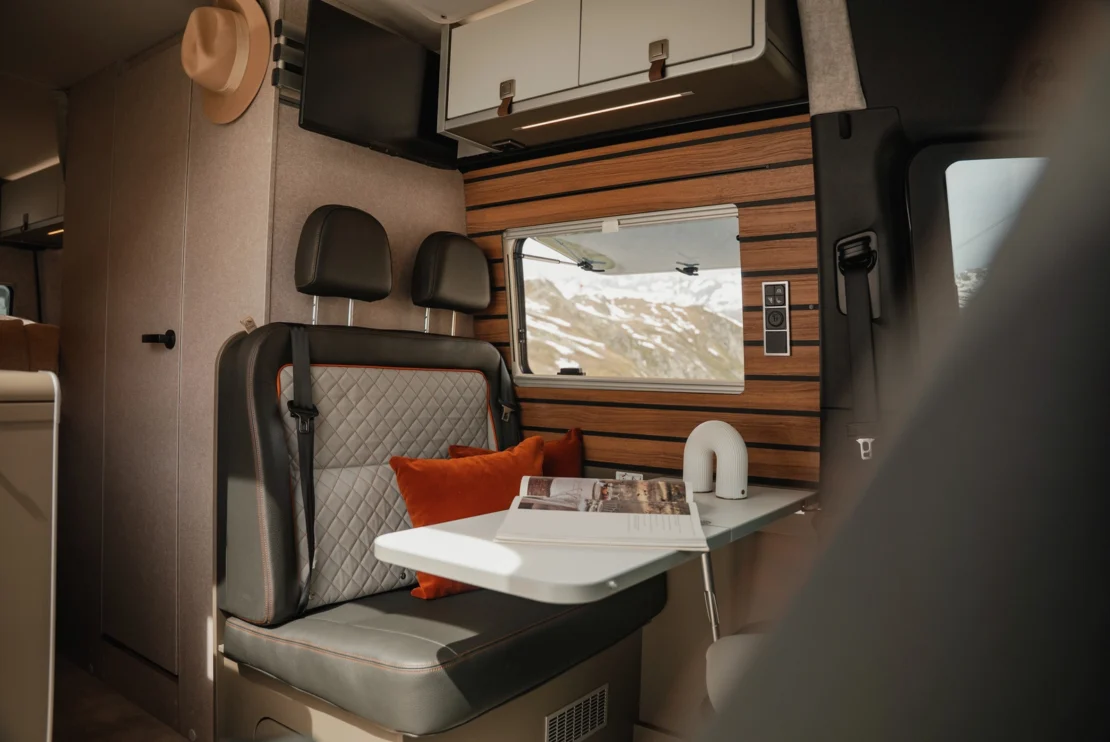
The most important number is not how much storage space the campervan appears to have. It is whether the loaded vehicle remains within its permitted weight.
A campervan can have large cupboards, under-seat storage and plenty of room in the rear while still having a relatively limited remaining payload.
That is why payload should be considered alongside the layout.
If you plan to carry bikes, sports equipment, lots of touring kit or travel with four people, your requirements may be very different from those of a couple taking shorter breaks.
Campervan Payload and a 3,500kg Weight Limit
Many campervans fall within a 3,500kg Maximum Authorised Mass.
For petrol and diesel vehicles, a Category B licence generally allows vehicles with a MAM of up to 3,500kg. Different rules apply to some zero-emission vehicles, and licence entitlements can depend on the vehicle and licence held.
If a motorhome has a MAM between 3,500kg and 7,500kg, a Category C1 licence is generally required.
Always check the categories shown on your own driving licence and the plated weight of the vehicle rather than assuming a particular campervan can be driven on your licence.
Where Can I Find My Campervan’s Maximum Weight?
The Maximum Authorised Mass is normally shown on the vehicle’s weight plate or sticker and may also appear within its documentation.
The plate can contain several figures, so it is important to know which one relates to the vehicle’s maximum permitted weight.
Your campervan dealer can also explain the relevant figures for a particular model.
When buying a campervan from Southdowns Motorhomes, ask us about the payload as part of your vehicle comparison. It can be just as important as choosing the right bed arrangement or kitchen layout.
How Can I Check the Actual Weight of My Campervan?
If you already own a campervan, one of the best ways to understand its real-world weight is to have it weighed.
A public weighbridge can give you an actual weight for the vehicle in its loaded condition.
For a useful reading, load the campervan as you would normally use it. That could include passengers, water, luggage, bikes and touring equipment.
You can then compare the measured weight with the vehicle’s permitted limits.
It can also be helpful to check individual axle weights. Staying within the overall vehicle limit does not automatically mean each axle is within its permitted limit.
Does Filling the Fresh Water Tank Affect Payload?
Yes. Water adds significant weight.
One litre of water weighs approximately one kilogram, so carrying 80 litres of fresh water means adding roughly 80kg.
Whether you need to travel with a full tank depends on your plans.
If you are travelling directly to a campsite where water is available, carrying less water during the journey may leave more capacity for other items. Your campervan handbook should be followed when deciding how much water to carry while travelling.
Do Bikes Count Towards Campervan Payload?
Yes.
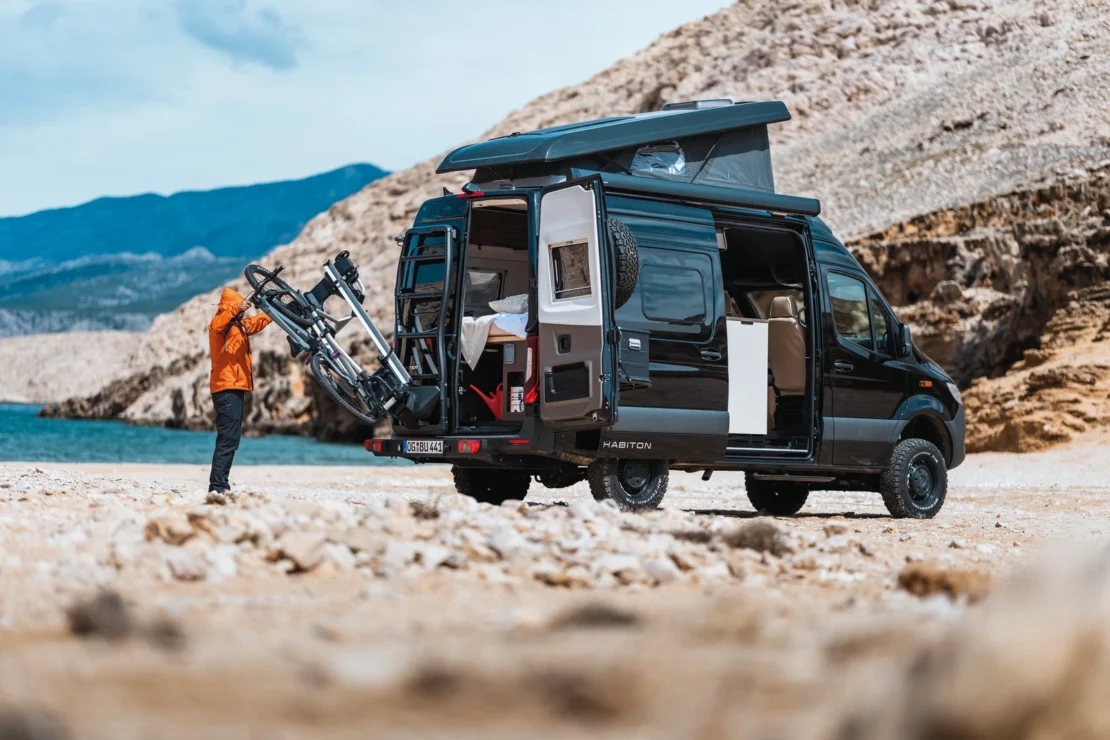
Remember to consider the weight of both the bikes and the carrier used to transport them.
Electric bikes are particularly worth checking because they can be considerably heavier than conventional bicycles.
If carrying bikes is an important part of how you plan to use your campervan, discuss this when choosing the vehicle. It may affect which models and payloads are best suited to your plans.
Do Factory-Fitted Extras Affect Payload?
They can.
Optional equipment adds physical weight to the vehicle, which can reduce the amount remaining for passengers and personal belongings.
Items such as upgraded batteries, awnings, air-conditioning systems and other accessories can all add weight.
When comparing two campervans, check the specification of the actual vehicle rather than relying only on a headline payload quoted for a standard model.
How Much Campervan Payload Do I Need?
There is no single payload figure that suits everyone.
Think about how you are likely to use the campervan.
A couple travelling for weekends with limited luggage may have very different requirements from a family taking several bikes, outdoor equipment, food and belongings for a two-week holiday.
Before choosing a campervan, make a rough list of what you expect to carry.
Think about:
- Number of passengers
- Bikes or sports equipment
- Amount of luggage
- Water carried while travelling
- Camping furniture
- Cooking and outdoor equipment
- Accessories you may want fitted
- Longer-term touring plans
This gives you a more realistic basis for comparing campervans.
Payload Should Be Part of Choosing the Right Campervan
Payload may not be the first specification you look at when viewing a campervan, but it deserves a place alongside layout, dimensions, berths and storage.
A campervan needs to work when it is loaded for the journey, not just when it is sitting empty in a showroom.
At Southdowns Motorhomes, we can talk you through the specifications and weight figures of the campervans you are considering, helping you understand how each model fits the type of touring you have planned.
Looking for your next campervan? Browse our current campervans for sale or visit Southdowns Motorhomes to compare models in person.
FAQs
Payload is the amount of additional weight a campervan can carry, including passengers, luggage, water, bikes and equipment.
Passengers add to the campervan’s loaded weight and need to be taken into account. Check the manufacturer’s specification to see whether any driver allowance is already included in its published weight figures.
It depends on how the manufacturer calculates the vehicle’s Mass in Running Order. Many campervans are quoted with the fresh-water tank at 20l, so additional water carried in the tank reduces the remaining payload. Check the specification for the individual model.
Yes. You should include the weight of the bikes and any bike rack or carrier fitted to the campervan.
The most accurate option is to take the loaded campervan to a public weighbridge and compare the result with the vehicle’s permitted weight limits.
MAM stands for Maximum Authorised Mass. It is the maximum permitted weight of the campervan when fully loaded.
Yes. Accessories such as awnings, batteries, bike racks and other fitted equipment can reduce the payload available for passengers and belongings.
There is no single ideal figure. The right payload depends on the number of passengers, the equipment you carry and how you plan to use the campervan.
Written by the Southdowns Motorhomes team. With decades of experience supplying premium motorhomes to UK and European customers, our team understands what makes a vehicle suitable for serious touring.