Payload is one of the most important figures to check when buying a motorhome, yet it can easily be overlooked when you are comparing layouts, bed arrangements, kitchens, storage and specification.
A motorhome may have a large rear garage and plenty of cupboards, but that does not necessarily mean you can fill all of that space and remain within the vehicle’s permitted weight.
Your motorhome payload has to cover the people, equipment and personal belongings that are not already included within its stated running weight. Depending on the motorhome and how you travel, that can include passengers, clothing, food, outdoor furniture, bikes, accessories and other touring equipment.
So how much motorhome payload do you actually need?
The answer depends on who travels with you, what you carry and the specification of the particular motorhome you are considering.
What Is Motorhome Payload?
In simple terms, payload is the amount of additional weight a motorhome can carry before reaching its permitted maximum laden weight.
Two figures are central to this:
MIRO – Mass in Running Order
This is the motorhome’s stated mass in a defined running condition.
MTPLM – Maximum Technically Permissible Laden Mass
This is the maximum permitted laden mass specified for the vehicle. You may also see terms such as MAM, or Maximum Authorised Mass, used when discussing vehicle and driving-licence weight limits.
As a starting point:
MTPLM − MIRO = stated payload
For example, if a motorhome has an MTPLM of 3,500kg and a MIRO of 3,050kg, the difference is 450kg.
That does not automatically mean you have 450kg available for suitcases and camping equipment. You need to understand exactly what has already been included in the MIRO figure and whether optional equipment has reduced the remaining payload.
The Camping and Caravanning Club describes user payload as the difference between gross vehicle weight and MRO and notes that it is intended to cover passengers, habitation equipment, some optional equipment and personal effects.
What Does MIRO Include on a Motorhome?
This is where buyers need to look carefully at the figures for the specific vehicle.
For motorhomes, Mass in Running Order commonly includes the manufacturer’s standard specification, an allowance of 75kg for the driver and 90% of the fuel tank. An allowance for gas is also normally included, while the amount of fresh water included can vary.
That last point matters.
You should not assume that every manufacturer, model or model year calculates MIRO in exactly the same way. Check the manufacturer’s technical information for the motorhome you are considering so that you know what its stated MIRO includes.
Optional equipment also needs attention. Factory-fitted or dealer-fitted equipment that is not part of the quoted MIRO can reduce the payload that remains available for your trips.
Items such as an awning, additional batteries, satellite equipment, air conditioning or other accessories all have weight.
Individually they may not appear significant, but together they can make a noticeable difference.

Why the 75kg Driver Allowance Matters
If the stated MIRO for your motorhome includes a 75kg allowance for the driver, you should take that into account when working out your real touring load.
For example, a driver weighing 85kg would account for 10kg more than the 75kg already allowed for in that MIRO calculation.
A passenger is different. Their weight normally needs to come from the available payload unless the manufacturer’s stated figures specifically account for them.
This is one reason why simply looking at a brochure payload figure is not enough. You need to relate it to the people and equipment that will actually be travelling.
How Quickly Can Motorhome Payload Be Used?
Faster than many buyers expect.
Imagine a motorhome with a published payload of 450kg. This example is purely illustrative rather than a recommendation for any particular motorhome.
You might need to account for:
- a passenger
- any driver weight above the MIRO allowance
- clothing and footwear
- food and drinks
- touring equipment
- outdoor chairs and a table
- bedding and towels
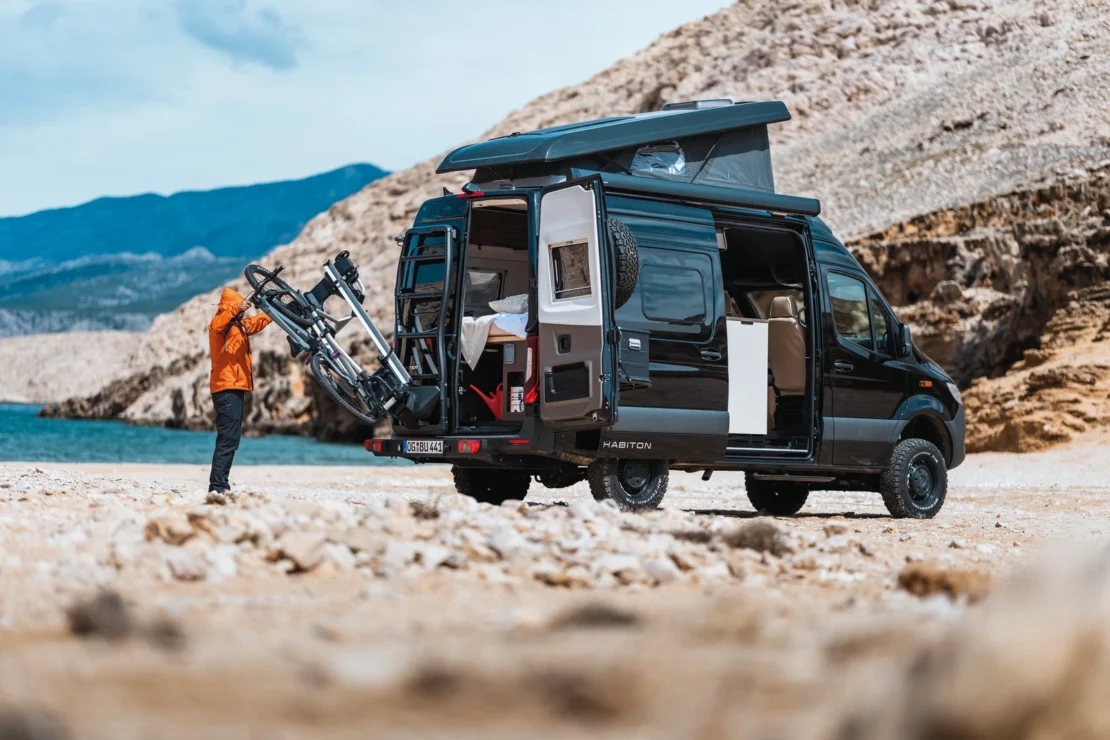
- bikes
- bike racks or other accessories that are not included in MIRO
- additional water being carried
- electrical equipment
- kitchen equipment
- tools and cables
- personal belongings
A couple travelling lightly may therefore have very different payload requirements from a family taking several bikes, outdoor equipment and enough kit for a longer tour.
The number printed in the brochure only becomes meaningful when you compare it with the way you intend to use the motorhome.
Is 300kg of Motorhome Payload Enough?
There is no single minimum payload figure that works for everyone.
A payload of around 300kg may suit some people travelling lightly, while it may be restrictive for another owner once passengers and equipment are taken into account.
Rather than working from a fixed target, make a list of what you realistically expect to carry.
Think about your normal trips rather than an unusually light weekend away.
If you regularly travel with bikes, outdoor equipment or a lot of personal kit, factor those items into the calculation before deciding that a motorhome has enough payload for you.
Is 500kg of Payload Better?
A larger payload gives you more capacity to work with, but the headline figure still needs to be checked against the motorhome’s specification and your intended use.
A motorhome with 500kg of stated payload could still lose part of that capacity through optional equipment.
You also cannot assume that staying below the overall MTPLM means every weight limit on the motorhome has been met.
That is because axle weights matter too.
Don’t Forget Your Motorhome’s Axle Limits
A motorhome has permitted maximum loads for its individual axles as well as an overall vehicle weight limit.
The vehicle’s weight plate identifies the relevant permitted weights, including maximum front and rear axle loads. These axle limits must not be exceeded.
This becomes particularly relevant when you have a large rear garage.
You might be within the motorhome’s overall permitted weight but still place too much load on the rear axle.
Heavy items therefore need to be loaded with care rather than simply placed wherever there is spare storage space.
If you plan to carry bikes, substantial outdoor equipment or other heavy items in a rear garage, look at both overall payload and axle capacity.
Does a 3,500kg Motorhome Have Less Payload?
Not necessarily, because payload depends on both the motorhome’s running mass and its maximum permitted mass.
However, the 3,500kg figure matters to many UK buyers because of driving-licence categories.
For petrol and diesel vehicles, a Category B driving licence covers vehicles with a maximum authorised mass of up to 3,500kg. A Category C1 licence covers vehicles between 3,500kg and 7,500kg MAM. Drivers should always check the categories shown on their own driving licence rather than assuming what they are entitled to drive based purely on age or when they passed their test.
That creates a balancing act for some buyers.
A 3,500kg motorhome can keep the vehicle within Category B limits, but depending on its size and MIRO, the payload available within that limit may need particularly careful checking.
A motorhome plated at a higher weight may provide more carrying capacity, but you must have the correct driving-licence entitlement to drive it.
Work Out Your Own Motorhome Payload Requirement
Before buying, try making a simple payload budget.
Start with the motorhome’s published payload and then account for the people and equipment you expect to carry.
Include items such as passengers, bikes, camping furniture, personal belongings and any accessories that are not already included within MIRO.
Don’t forget fluids either.
Water has significant weight. One litre of water has a mass of approximately one kilogram, so travelling with an additional 80 litres of water means carrying roughly another 80kg.
Whether that water is already accounted for in the manufacturer’s stated MIRO depends on the particular motorhome and the basis used for its published figures. Check before adding or subtracting it from your calculation.
Optional Equipment Can Reduce Your Available Payload
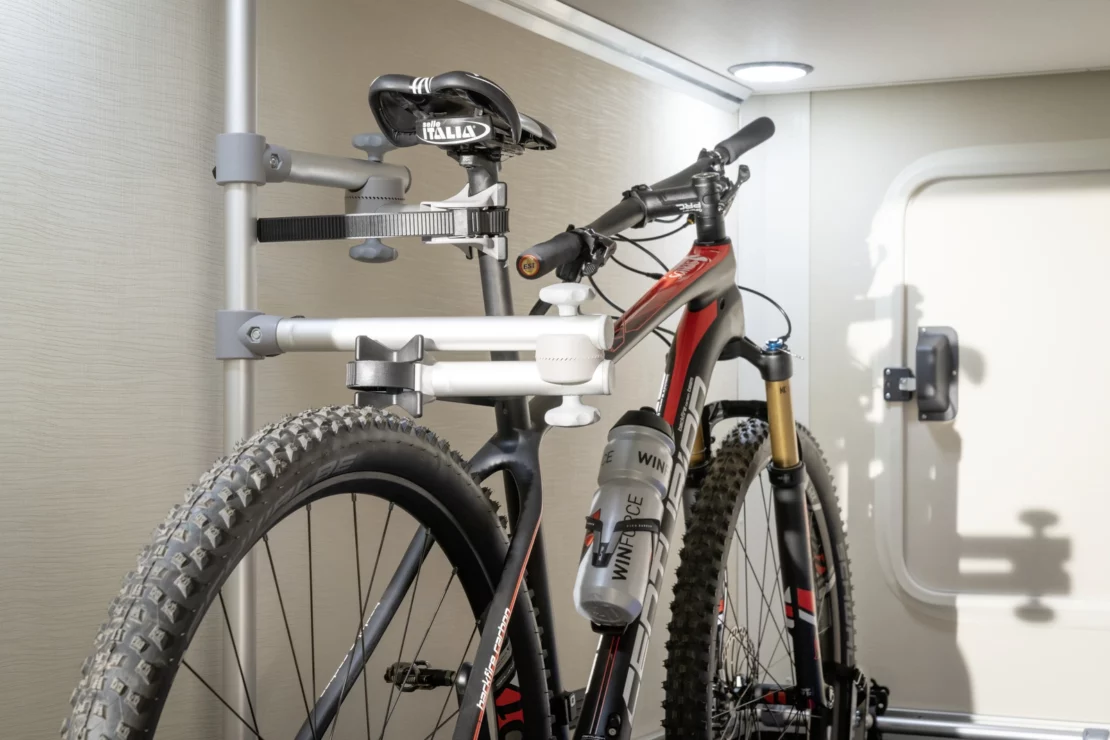
This is particularly worth checking when comparing two examples of the same motorhome.
The brochure figure may be based on a standard vehicle, while the motorhome in front of you may have additional equipment fitted.
That equipment does not become weight-free simply because it was fitted before you bought the vehicle.
Ask what specification was used to calculate the stated MIRO and whether fitted extras need to be deducted from the available payload.
This can give you a far more realistic figure for the motorhome you are actually considering.
The Best Way to Check Your Motorhome’s Real Weight
Calculations are useful when choosing a motorhome, but once you own one, a weighbridge can tell you what the vehicle actually weighs in touring condition.
Load the motorhome as you would for a normal trip, including the equipment you usually carry, and have it weighed.
It can also be useful to establish the load on each axle where suitable weighing facilities are available.
That allows you to compare the measured figures with the limits shown on the vehicle’s weight plate.
The GOV.UK service can be used to find a local weighbridge.
How Much Payload Should You Look for When Buying?
There is no single figure that every motorhome buyer should aim for.
Instead, ask yourself:
Who will normally travel?
A solo traveller has different requirements from a couple or family.
How much equipment do you carry?
Bikes, outdoor furniture and other leisure equipment soon add weight.
Will you use the rear garage heavily?
If so, rear axle capacity deserves particular attention.
What optional equipment is fitted?
Find out whether its weight has already been accounted for.
How much water do you normally travel with?
Check how water is treated within the stated MIRO.
What does your driving licence allow you to drive?
Do not choose a higher-weight motorhome without checking your entitlement.
Check Payload Before You Choose Your Motorhome
Payload is not the most exciting figure on a motorhome specification sheet, but it can have a major effect on how practical that motorhome is for you.
The key is to look beyond the headline number.
Check the MIRO, MTPLM or MAM, individual axle limits, fitted equipment and exactly what the manufacturer has included within its weight figures. Then compare the remaining carrying capacity with the way you genuinely plan to travel.
When comparing motorhomes at Southdowns Motorhomes, it is worth looking at payload alongside layout, storage and specification from the start. A motorhome needs to have space for your kit, but it also needs the permitted carrying capacity to transport it.
Taking a little time to check the figures before you buy can help you choose a motorhome that suits the way you intend to use it.
FAQs
There is no single payload figure that suits every motorhome owner. The amount you need depends on how many people are travelling, what equipment you carry, how much water you travel with and what optional equipment is fitted.
A couple travelling lightly may need far less carrying capacity than a family taking bikes, outdoor furniture and extra equipment. The best approach is to calculate the weight of the people and items you expect to carry and compare this with the motorhome’s available payload.
Motorhome MIRO commonly includes a 75kg allowance for the driver.
If the driver weighs more than 75kg, the additional weight needs to be taken into account when calculating the remaining payload.
Always check the manufacturer’s figures for the specific motorhome, as the stated MIRO should be read alongside the assumptions used to calculate it.
It can, but the amount included in the MIRO calculation can vary between manufacturers and models.
Some published figures may include a defined amount of fresh water, while others may use a reduced travelling quantity. For this reason, buyers should check the technical information for the exact motorhome rather than assuming a full fresh-water tank is included.
As a useful guide, one litre of water has a mass of approximately one kilogram.
Yes.
A motorhome has individual maximum axle loads as well as an overall maximum permitted weight. It is therefore possible for the total weight of the motorhome to remain below its MTPLM or MAM while one axle exceeds its permitted limit.
This is particularly worth checking when carrying heavy equipment in a rear garage or fitting equipment towards the back of the vehicle.
A motorhome must not exceed the permitted weight limits shown for the vehicle.
This includes the overall maximum authorised weight and the permitted axle loads. Driving an overloaded vehicle can result in enforcement action and may also affect how the vehicle handles and brakes.
The safest way to check your actual touring weight is to use a suitable weighbridge with the motorhome loaded as you would normally travel.
You can take your motorhome to a public weighbridge.
For the most useful result, load the vehicle as you would for a normal trip, including passengers, luggage, equipment, food and any water you normally carry.
Where the weighbridge allows it, it is also worth checking the front and rear axle loads separately so you can compare them with the limits shown on the vehicle’s weight plate.
Yes, if the weight of that equipment is not already included in the stated MIRO.
Items such as awnings, extra batteries, air conditioning, bike racks and other accessories all add weight. The combined weight of several options can noticeably reduce the payload left for passengers and personal belongings.
When buying a motorhome, ask whether fitted options have already been included in the quoted weight figures.
For petrol and diesel vehicles, a Category B licence covers vehicles with a maximum authorised mass of up to 3,500kg.
Vehicles above 3,500kg may require Category C1 entitlement, depending on the vehicle and the licence held.
Drivers should check the categories shown on their own driving licence before buying or driving a heavier motorhome.

Written by the Southdowns Motorhomes team. With decades of experience supplying premium motorhomes to UK and European customers, our team understands what makes a vehicle suitable for serious touring.