Choosing the right bed layout can make a big difference to how comfortable a campervan feels, particularly if you plan to spend several weeks at a time touring.
Two of the most common fixed rear-bed layouts are the transverse bed and longitudinal beds. Both have clear advantages, but they suit different priorities.
A transverse bed can help keep the overall vehicle shorter, while longitudinal beds usually provide easier access and more independence for each sleeper.
So, which should you choose?
What Is a Transverse Bed in a Campervan?
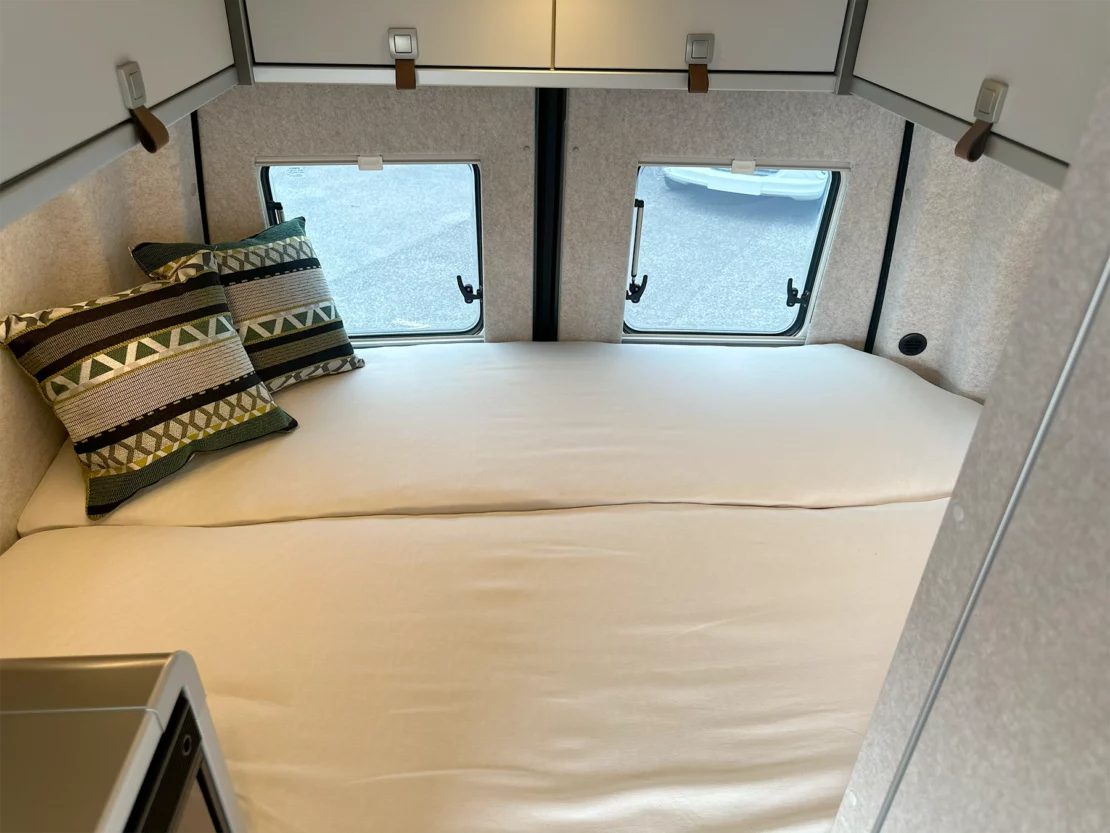
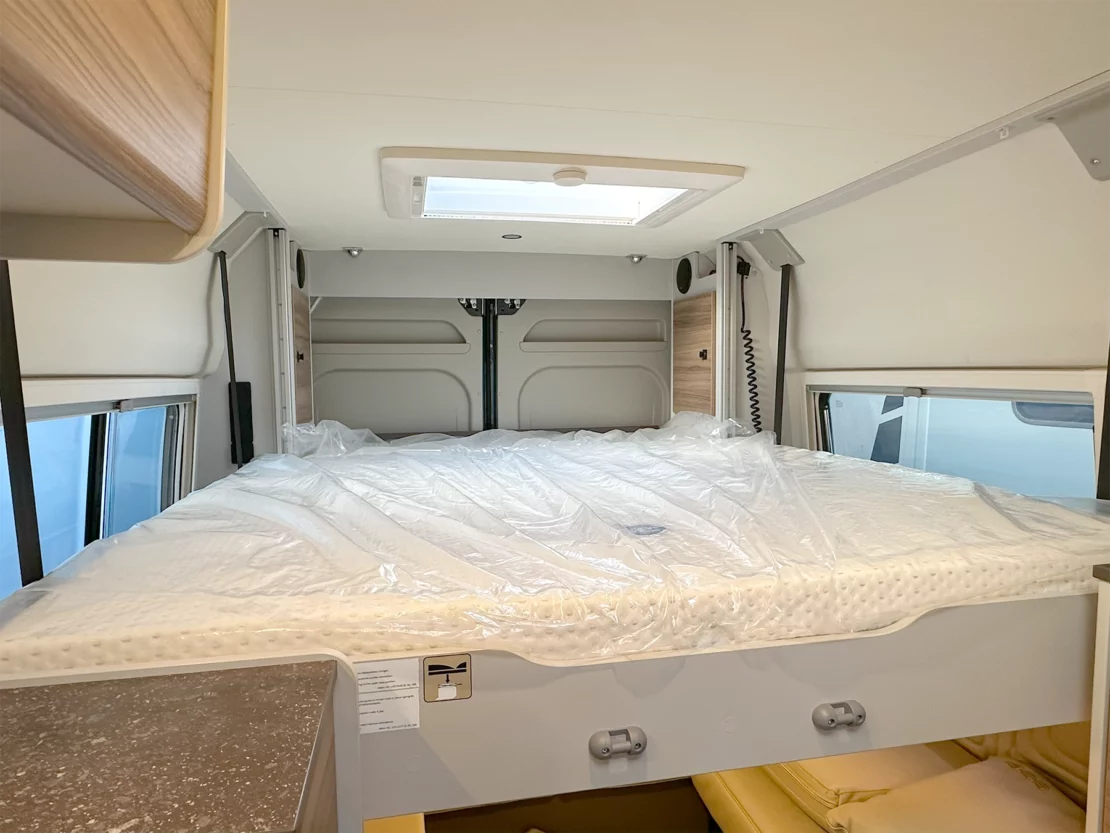
A transverse bed runs across the width of the campervan, usually at the rear.
Rather than sleeping in the same direction as the vehicle travels, you sleep from one side of the van to the other.
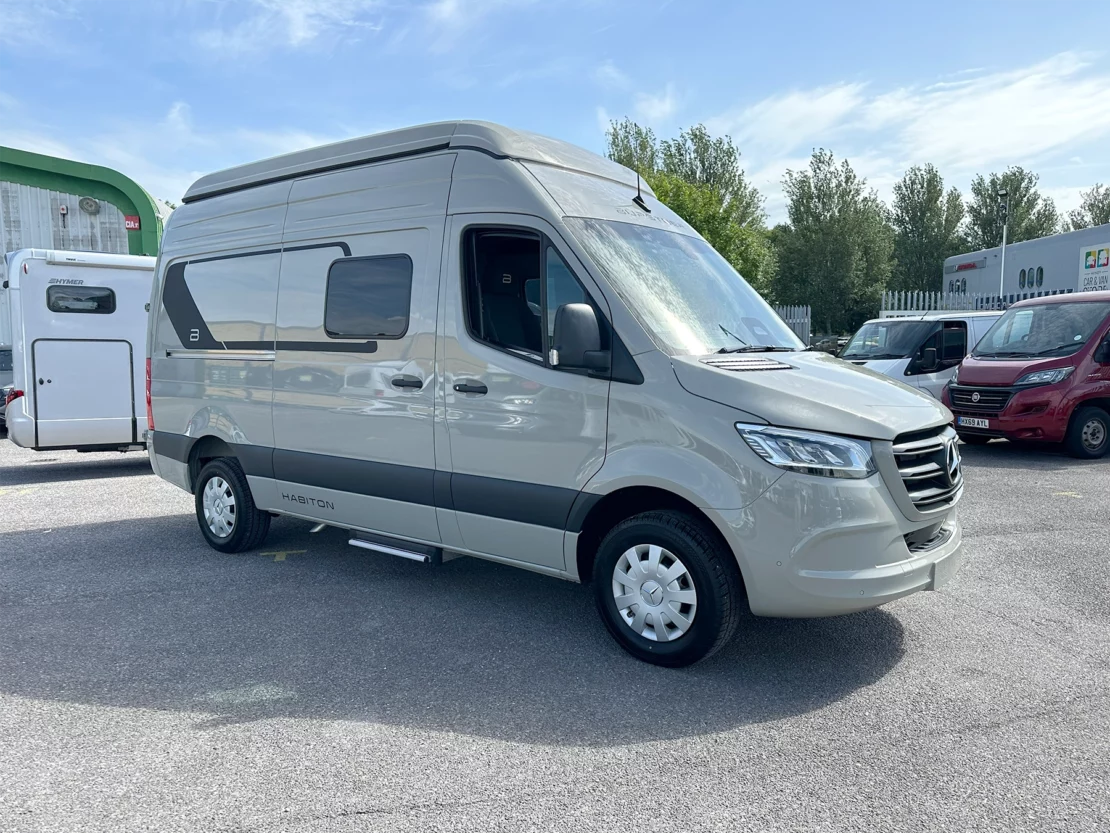
This arrangement is particularly common in campervans around six metres long because it allows manufacturers to fit a permanent double bed into a relatively compact space.
The area underneath the bed is often used for storage, giving owners room for outdoor furniture, touring equipment and other luggage.
Advantages of a transverse bed
One of the main benefits is efficient use of space.
Because the bed sits across the width of the vehicle, it takes up less of the campervan’s overall length. Manufacturers can then use more of the remaining space for the kitchen, washroom and seating area.
For buyers who want a shorter campervan that is easier to manoeuvre, this can make a transverse layout very appealing.
Other benefits can include:
- A permanent bed that does not need making up each evening
- Good storage beneath the sleeping area
- A more compact overall vehicle length
- More living space relative to the length of the campervan
- A straightforward layout that works well for touring couples
For many buyers, a transverse bed is one of the simplest ways to combine a fixed bed with the practicality of a six-metre campervan.
What Should You Consider With a Transverse Bed?
The main compromise concerns access.
If two people are sharing the bed, the person sleeping next to the rear or side wall may need to climb over their partner to get out during the night.
That may not bother you at all, particularly if you are already used to this type of arrangement. For other couples, it can become more noticeable on longer trips.
Bed length is also worth checking.
A campervan is relatively narrow compared with a conventional bedroom, so taller buyers should always try the bed rather than relying only on the dimensions in a brochure.
Some manufacturers use body extensions or shaped side panels to create additional sleeping length, but the space available varies between models.
What Are Longitudinal Beds in a Campervan?
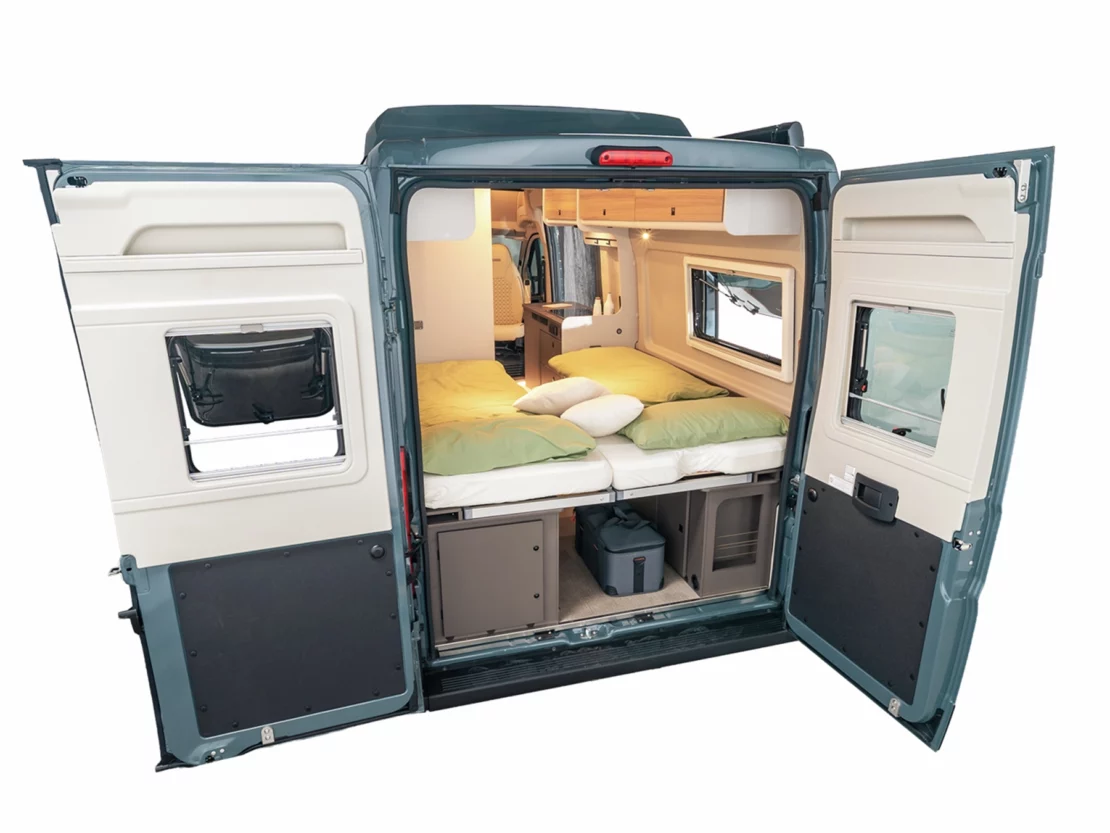
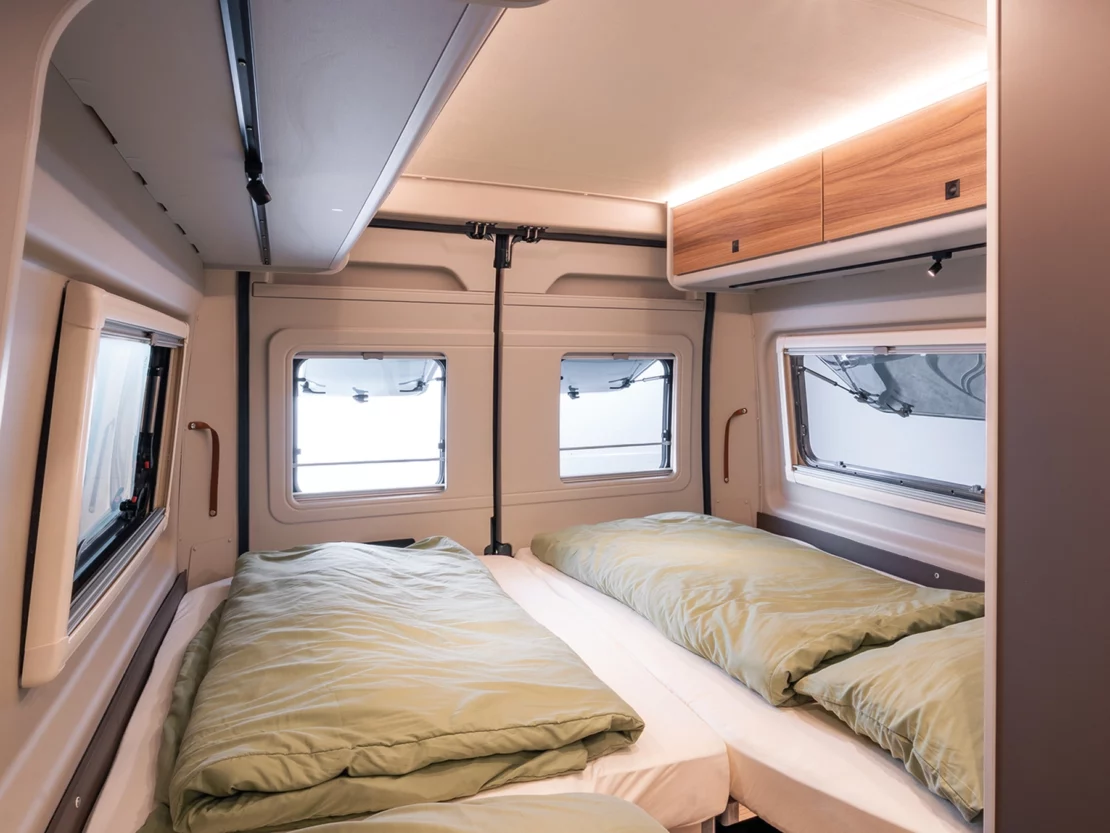
Longitudinal beds run from front to back rather than across the vehicle.
They are often configured as two single beds at the rear of the campervan, although some layouts allow the space between them to be filled to form a larger sleeping area.
The biggest benefit is independent access.
Each person can usually get into and out of their own bed without disturbing the other. There is normally a central walkway or steps between the beds, making them easier to reach.
Advantages of Longitudinal Campervan Beds
For couples who place a high priority on sleeping comfort, longitudinal beds can be an excellent choice.
The main advantages include:
- Easier access to each bed
- No need to climb over your partner
- Separate sleeping spaces
- Often more suitable for taller occupants
- Convenient access during the night
- The option on some models to create one large rear bed
This arrangement can be particularly useful for longer tours, when small differences in day-to-day comfort tend to become more important.
What Should You Consider With Longitudinal Beds?
The extra comfort usually requires extra vehicle length.
Two beds running along the length of the campervan naturally need more floor space than one bed positioned across its width. As a result, longitudinal layouts are commonly found in longer campervans.
For example, a buyer comparing a campervan around six metres long with one around 6.3 metres may find that the extra length is largely being used to provide easier bed access.
That additional length can affect parking and manoeuvring, so it is worth considering how and where you intend to use the campervan.
If most of your trips involve small villages, narrow roads and compact campsites, you may prefer to keep the vehicle as short as possible.
If you are happy with a slightly longer campervan in return for easier sleeping arrangements, longitudinal beds may be the better choice.
Transverse Bed vs Longitudinal Beds: Quick Comparison
| Feature | Transverse Bed | Longitudinal Beds |
|---|---|---|
| Bed direction | Across the campervan | Front to back |
| Typical vehicle length | Often found in shorter campervans | Common in longer campervans |
| Individual bed access | More restricted | Usually very good |
| Fixed bed | Yes | Yes |
| Under-bed storage | Often generous | Often generous |
| Suitable for taller sleepers | Model dependent | Often better |
| Ease of getting up at night | One person may need to climb over the other | Each person can normally get out separately |
| Best suited to | Buyers prioritising compact dimensions | Buyers prioritising bed access and sleeping comfort |
Is a Transverse Bed Better for a Six-Metre Campervan?
It can be.
A transverse rear bed is particularly effective when manufacturers are working within a vehicle length of around six metres.
By placing the bed across the rear, they can fit a permanent sleeping area without using as much of the campervan’s length.
That can leave room for a practical kitchen, washroom, storage and front seating area while keeping the overall dimensions manageable.
If you want a campervan that is relatively compact but do not want to convert the lounge into a bed every evening, a transverse layout deserves serious consideration.
Are Longitudinal Beds More Comfortable?
For many couples, the main improvement is not necessarily the mattress itself but the way the beds are accessed.
With separate longitudinal beds, each person can usually go to bed, get up or visit the washroom without climbing over the other.
That independence can make a noticeable difference when touring for longer periods.
The layout can also suit couples with different sleeping routines. If one person gets up earlier than the other, separate access is particularly handy.
Comfort remains personal, though. Mattress dimensions, bed height, headroom and the steps used to reach the beds should all be checked before choosing a campervan.
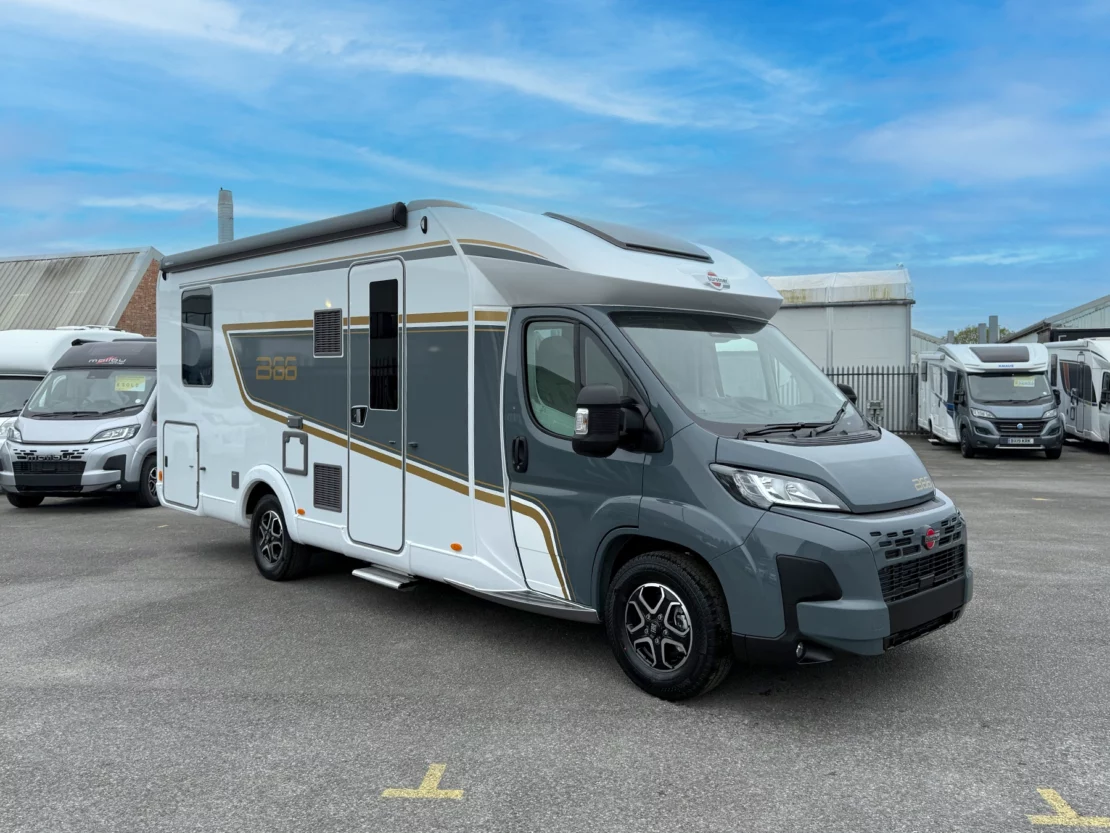
A Good Real-World Comparison: Burstner B66 600 C vs 640 C
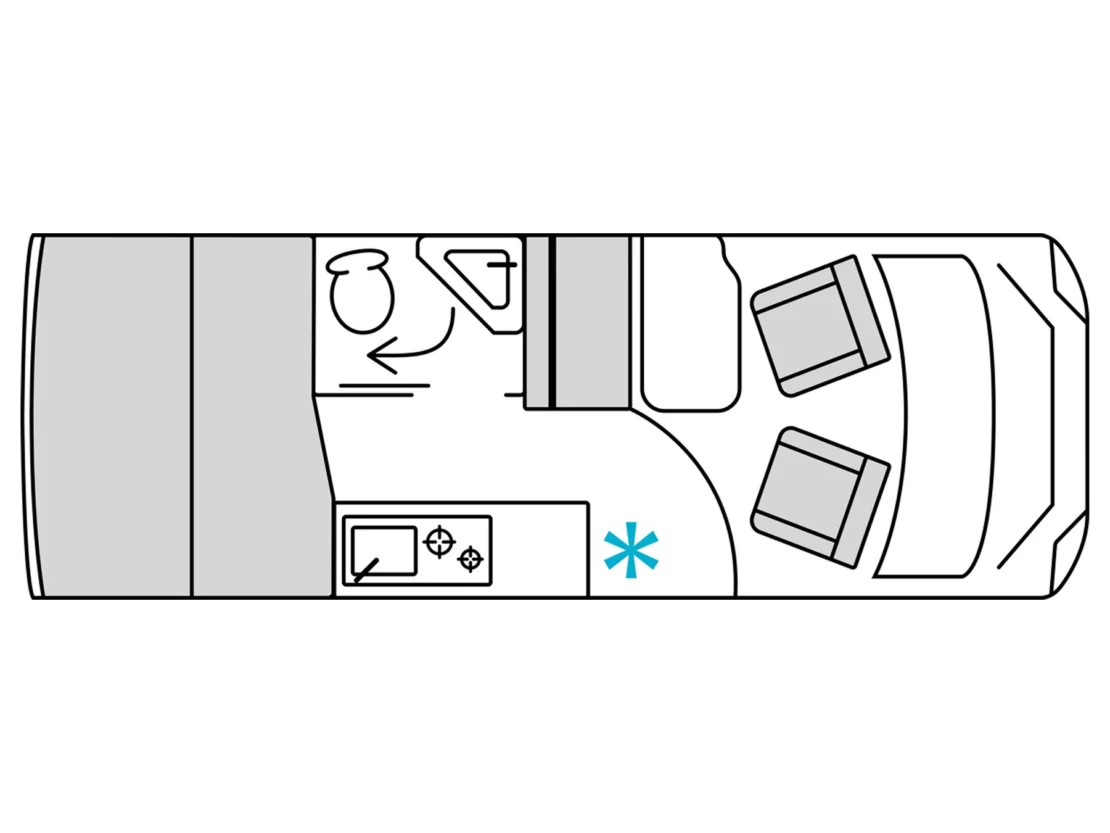
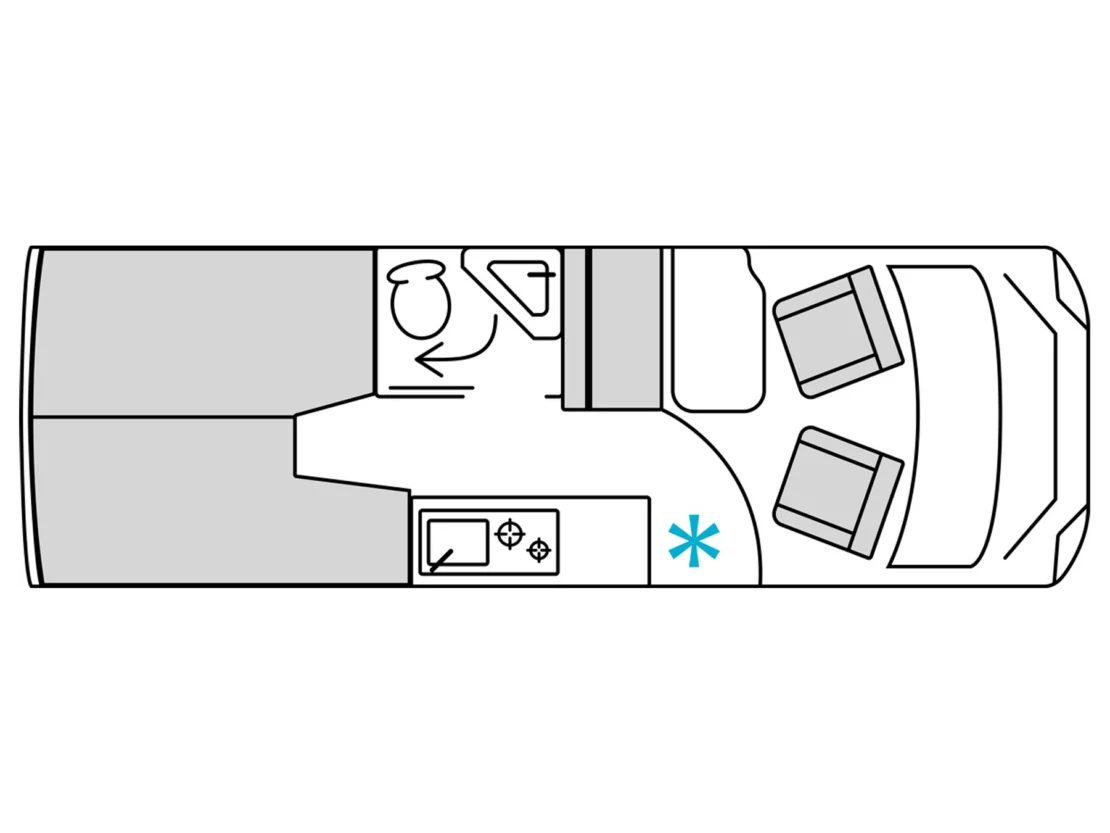
The Burstner B66 campervan range provides a useful example of how the choice between these layouts affects the vehicle.
The B66 600 C uses a transverse rear bed, helping create a fixed-bed layout within a campervan around six metres long.
The B66 640 C, by comparison, uses longitudinal rear beds and has a longer body.
It demonstrates the basic trade-off clearly: the transverse arrangement helps keep the vehicle compact, while the longer model gives each sleeper easier access to their bed.
For buyers considering the two formats, viewing them side by side is far more useful than simply comparing specification sheets.
Which Campervan Bed Layout Should You Choose?
Start with the way you actually intend to use your campervan.
Choose a transverse bed if:
- Keeping the campervan compact is a priority
- You want a permanent rear bed
- You are comfortable sharing a double bed
- Climbing across your partner is unlikely to cause a problem
- You want to make efficient use of the available interior space
Choose longitudinal beds if:
- Easy bed access is a high priority
- You prefer separate sleeping spaces
- One or both occupants are tall
- You regularly get up during the night
- You plan to spend longer periods touring
- You are comfortable driving a slightly longer campervan
There is no single layout that suits everybody.
A couple taking frequent weekend breaks may reach a very different decision from buyers planning months of European touring.
Try the Bed Before You Buy
Bed layouts can look very similar in floorplans and photographs, but getting inside the campervan can quickly change your opinion.
Lie on the bed.
Check whether your feet touch the end.
Sit up and check the headroom.
Try getting in and out from both sleeping positions.
Open nearby cupboards while the other person is standing in the aisle.
Look underneath the bed and consider whether the storage will hold the equipment you normally take away.
It is also worth walking through your usual evening and morning routine. Think about getting changed, reaching the washroom and moving around the campervan while your partner is still in bed.
These simple checks can tell you far more than a list of measurements.
Find the Right Campervan Layout at Southdowns Motorhomes
At Southdowns Motorhomes, we have campervans with a range of different sleeping arrangements, including transverse and longitudinal fixed-bed layouts.
If you are deciding between them, visiting our showroom gives you the chance to compare different models properly and see how each layout feels in person.
You can also browse our current campervans online before your visit and narrow down the models that match your preferred size, bed layout and touring requirements.
Whether you prefer the compact dimensions of a transverse bed or the easier access provided by longitudinal beds, the best choice is the one that works with the way you travel.
FAQs
Yes, they can be very comfortable, especially if you want a fixed double bed in a compact campervan. The main thing to check is the bed length and how easy it is for both people to get in and out. Taller buyers should always try the bed in person before deciding.
A transverse bed runs across the width of the campervan, while longitudinal beds run from front to back. Transverse beds usually help keep the vehicle shorter, while longitudinal beds tend to provide easier access for each sleeper.
They often are, because they can provide more sleeping length than a transverse bed. However, bed dimensions vary between models, so it is always worth checking the exact measurements and trying the bed before buying.
Often, yes. If one person sleeps against the rear or side wall, they may need to climb over the other person to get out of bed. For some couples this is not an issue, but others prefer longitudinal beds because each sleeper has easier access.
They can be if comfort and easy bed access are high priorities. Longitudinal beds are particularly useful for longer trips, couples with different sleeping routines, or anyone who regularly gets up during the night.
In many cases, yes. Because the beds run from front to back, they take up more of the vehicle’s length. This is why longitudinal bed layouts are often found in campervans around 6.3 metres long rather than shorter six-metre models.
Both layouts can provide good storage beneath the rear beds. Transverse beds often have a large garage-style storage area underneath, while longitudinal bed layouts can also provide substantial rear storage. The exact amount depends on the design of the campervan.
Yes. A transverse rear bed is a popular choice in six-metre campervans because it provides a permanent sleeping area without taking up too much of the vehicle’s overall length.
That depends on how you travel. A transverse bed can work well for couples who want a compact campervan and do not mind sharing a fixed double bed. Longitudinal beds may suit couples who want separate sleeping spaces and easier access during the night.
Yes. Bed dimensions on paper do not always tell you how comfortable a layout will feel. At Southdowns Motorhomes, we recommend trying the bed, checking the headroom and testing how easy it is to get in and out before choosing your campervan.

Written by the Southdowns Motorhomes team. With decades of experience supplying premium motorhomes to UK and European customers, our team understands what makes a vehicle suitable for serious touring.